Living Planet Report 2026 Records Wildlife Population Decline
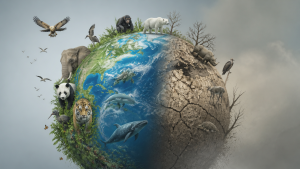
The Living Planet Report 2026 was released on 8 October 2026 by WWF in partnership with the Zoological Society of London (ZSL). It records a 73% decline in the average size of monitored wildlife populations worldwide between 1970 and 2022, based on nearly 35,803 population trends across 5,790 vertebrate species.
Living Planet Index and population trends
The Living Planet Index (LPI) tracks changes in the relative abundance of monitored vertebrate populations over time. Its 73% decline is an average across monitored populations; it does not mean that 73% of all wildlife species have become extinct. Freshwater populations declined by 85% on average between 1970 and 2022, compared with 69% for terrestrial populations and 59% for marine populations. By region, monitored vertebrate populations declined by 95% in Latin America and the Caribbean, 80% in Africa, and 49% in Asia and the Pacific.
Drivers of biodiversity loss
The report identifies habitat loss and degradation, overexploitation, climate change, pollution, invasive species and disease as major pressures on wildlife populations. It also links these pressures to weaknesses in global food, energy and financial systems. The report uses the term “positive tipping points” for changes that can accelerate system-wide transitions. It describes the energy sector as having passed such a point through the rapid expansion of renewable energy, while food and finance systems remain in earlier enabling phases, with further transformation needed by 2030.
Conservation outcomes and recovery
The report, subtitled “The Science of Hope”, states that about half of the populations in the global LPI are stable or increasing. It cites wild tiger populations rising by more than 70% over 15 years, stable or growing African elephant populations, and green sea turtles and Atlantic bluefin tuna being removed from the Endangered list.
Important Facts for Exams
:
- The Living Planet Index covers monitored vertebrate populations, rather than every species on Earth.
- Freshwater wildlife populations had the steepest average decline among the three broad habitats assessed.
- The report identifies six major direct pressures: habitat loss, overexploitation, climate change, pollution, invasive species and disease.
- Green sea turtles and Atlantic bluefin tuna were cited as conservation recovery examples.
India recorded increases in tiger, Asiatic lion and greater one-horned rhinoceros populations; its Asiatic lion count rose from 674 in 2020 to 891 in 2025, and a first science-based estimate counted 6,324 Ganges river dolphins. In Madagascar, 1.2 million hectares of primary humid forest were lost between 2002 and 2025, while 41% of species, including 98% of lemur species, were threatened with extinction.
| Related | |
|---|---|