Landmark Indian Judgments on Digital Rights
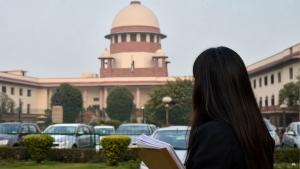
Indian courts have steadily widened the meaning of fundamental rights in the digital age. Through a series of landmark judgments, the Supreme Court and High Courts have linked privacy, speech, access, and equality to the use of technology and the internet.
Constitutional Foundation of Privacy
The modern jurisprudence on digital rights began with Justice K.S. Puttaswamy v. Union of India (2017), where a nine-judge bench unanimously held that the right to privacy is a fundamental right under Article 21.
- Informational privacy: The judgment recognized that personal data protection is part of individual autonomy.
- Three-fold test: Any state interference with privacy must satisfy legality, necessity, and proportionality.
- Constitutional basis: The ruling became the foundation for later debates on data protection and surveillance.
Right to Digital Access
Indian courts have also begun treating access to digital services as part of basic constitutional protection. In Amar Jain v. Union of India and Pragya Prasun v. Union of India (30 April 2025), the Supreme Court declared the right to digital access to essential services as a fundamental right under Article 21.
- Digital exclusion: The Court held that exclusion of marginalized or disabled persons from digital systems can amount to socio-economic discrimination.
- Accessible KYC: Regulators and government authorities were directed to make digital KYC and electronic authentication accessible to persons with disabilities.
- Statutory link: The accessibility requirement aligns with the Rights of Persons with Disabilities Act, 2016.
Protection of Online Speech and Expression
The internet has also been brought within the protection of free speech. In Shreya Singhal v. Union of India (2015), the Supreme Court struck down Section 66A of the Information Technology Act, 2000 as unconstitutional.
- Article 19(1)(a): The Court held that criminalizing “offensive” online speech violated freedom of speech and expression.
- Discussion-advocacy-incitement test: The Court distinguished protected speech from direct incitement.
- Permissible restriction: Only speech that directly incites violence or public disorder can be curtailed under Article 19(2).
Internet Shutdowns and Proportionality
The Supreme Court has also examined the impact of internet restrictions on daily life and economic activity. In Anuradha Bhasin v. Union of India (2020), it held that speech and trade conducted over the internet are protected derivative rights under Article 19(1)(a) and Article 19(1)(g).
- Indefinite shutdowns: The Court ruled that indefinite internet shutdowns are impermissible.
- Necessity and proportionality: Shutdown orders must satisfy constitutional standards of necessity and proportionality.
- Publication of orders: Suspension orders must be made public and remain open to judicial review.
In Faheema Shirin v. State of Kerala (2019), the Kerala High Court held that the right to access the internet is part of the right to privacy and education under Article 21.
Legislative Framework and Compliance Deadlines
Judicial developments have been accompanied by a growing statutory framework for digital governance. The Digital Personal Data Protection (DPDP) Rules, 2025, notified by MeitY on 13 November 2025, formally established a four-member Data Protection Board of India (DPBI) to handle inquiries and impose penalties.
- Phased compliance: The DPDP Rules, 2025 provide an 18-month compliance schedule for data fiduciaries.
- Consent Manager deadline: Registration with the DPBI is to be completed by 13 November 2026.
- Core obligations: Enforcement of core compliance obligations begins on 13 May 2027.
- Internet suspension law: Internet shutdowns are governed by Section 20 of the Telecommunications Act, 2023 and the Telecommunications (Temporary Suspension of Services) Rules, 2024.
- Maximum duration: The rules cap any telecom suspension order at 15 days.
Key Prelims Takeaways
- Privacy: K.S. Puttaswamy (2017) made privacy a fundamental right under Article 21.
- Digital access: Amar Jain and Pragya Prasun (2025) recognized the right to digital access to essential services.
- Accessible systems: Digital KYC and electronic authentication must be accessible to persons with disabilities.
- Online speech: Shreya Singhal (2015) struck down Section 66A of the IT Act.
- Speech test: The Court applied the discussion-advocacy-incitement standard for online expression.
- Internet shutdowns: Anuradha Bhasin (2020) held that indefinite shutdowns are unconstitutional and orders must be published.
- Internet as a right: Faheema Shirin (2019) linked internet access to privacy and education under Article 21.
Exam fact: Indian digital rights jurisprudence mainly grows from Articles 19 and 21, especially on privacy, speech, access, and proportionality.
| Related | |
|---|---|