Khandwa integrated fish-farming aqua park begins operations with tribal women’s groups set to manage it
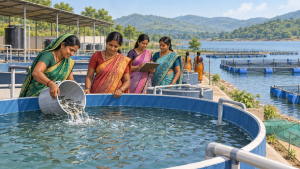
An integrated fish-farming aqua park began operations in Roshni village, Khalwa block, Khandwa district, Madhya Pradesh, on 20 May 2026. The start was marked by the release of 2.5 lakh fish seed into the facility’s primary tanks.
Planned management and production
The facility spans about 50 acres and is planned to be managed by 160 women from 16 tribal self-help groups. Its monthly fish production target is about 30 tonnes; this is a goal, not achieved output.
Fish-rearing system
The rearing plan uses biofloc tanks for early-stage fish before moving them through larger rearing systems. Cage culture in the Aonliya Dam backwaters is also part of the planned production system.
Important Facts for Exams
- Carbon-driven nitrogen removal: Biofloc systems add readily available carbon so bacteria take up more nitrogen, improving water quality while generating biomass that can feed cultured animals.
- Microbial feed: Bacterial flocs provide fish with protein- and lipid-rich food throughout the day.
- Cage-site carrying capacity: Because cages exchange water directly with the surrounding waterbody, siting and stocking must account for currents, dissolved oxygen and ecological carrying capacity.
Category: Madhya Pradesh
Originally written on
May 28, 2026
and last modified on
November 20, 2026.
| Related | |
|---|---|