Karnataka High Court Upholds Disability Commissioner’s Authority
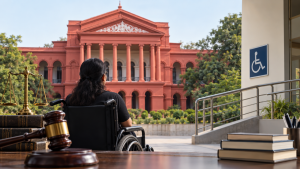
The Karnataka High Court upheld the authority of the State Commissioner for Persons with Disabilities under the Rights of Persons with Disabilities Act, 2016, to direct private organisations to pay compensation and provide accessible facilities. A bench presided over by Justice Suraj Govindaraj upheld the Commissioner’s order in favour of teacher Barnali Rawat.
Relief ordered for teacher
The order directed a private school to pay Rawat ₹10 lakh in compensation and provide a ground-floor wheelchair-accessible classroom, a disability-friendly toilet, a monthly vehicle allowance of ₹15,000, 15 minutes of rest after every two hours, and online teaching options when she cannot attend in person. The case followed the school’s challenge to a Commissioner’s order dated June 12, 2020. Rawat became disabled after an incident in 2013.
Accessibility measures for public buildings
The Court directed the State government to establish a strict Standard Operating Procedure (SOP), a State Accessibility Authority and district committees within six months to monitor accessibility compliance in buildings. Under the SOP, public buildings cannot receive occupancy certificates unless they meet Section 44 of the Act and the Harmonised Guidelines-2021. Compliance with disability-accessibility rules must also be a condition for renewing trade licences of organisations operating in public buildings.
Important Facts for Exams
- Civil-court powers: Section 82 gives a State Commissioner specified civil-court powers, including summoning witnesses, compelling document production and requisitioning public records during inquiries.
- Existing-building deadline: Section 45 separately requires existing public buildings to be made accessible within five years of the relevant rules’ notification, unlike Section 44’s construction-stage controls.
| Related | |
|---|---|