Karnataka Funds Drinking Water, Seeks Central Drought Assessment
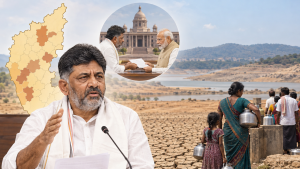
On 19 July 2026, Karnataka Chief Minister D.K. Shivakumar announced an additional ₹1 crore for drinking-water work in each rural taluk, citing rainfall deficits in 178 taluks. He had earlier announced ₹1 crore for each Assembly constituency.
Rainfall deficit and central assessment
On 14 July, Shivakumar wrote to Prime Minister Narendra Modi seeking a central assessment team to evaluate the drought situation. His letter stated that, by 11 July, Karnataka had received 203 mm of rain against a normal 292 mm—a 30% deficit. Rainfall was deficient to severely deficient in 18 of 31 districts and 141 of 240 taluks. Revenue Minister G. Parameshwara cited a 37% statewide deficit from 1 June to 17 July. The state sought central assessment before making a formal drought declaration.
Drinking-water priorities
Officials were directed to prioritise drinking water and reserve available reservoir water solely for drinking, not crops.
Important Facts for Exams
- Drought indicators: India’s 2016 Drought Manual uses rainfall, vegetation, soil-moisture and hydrological indicators; rainfall shortfall alone is not a complete impact-based assessment.
- Declaration authority: Under India’s drought-management framework, state governments declare drought; central assessment and the state’s formal declaration are separate administrative functions.
- Central relief assessment: A state seeking National Disaster Response Fund assistance submits a memorandum; an Inter-Ministerial Central Team then assesses the reported losses.
- Rainfall departure classes: The India Meteorological Department classifies seasonal rainfall 20–59% below normal as deficient, and departures of 60–99% below normal as large deficient.
| Related | |
|---|---|