Kargil Vijay Diwas: Operation Vijay and Strategic Significance
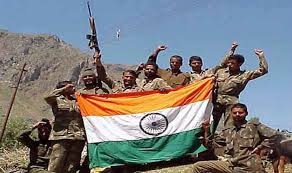
Kargil Vijay Diwas is observed annually on July 26 across India. The day marks the successful conclusion of Operation Vijay in 1999, during which the Indian Armed Forces reclaimed high-altitude mountain outposts in the Kargil sector of Ladakh that had been covertly occupied by Pakistani military personnel and state-backed infiltrators.
The Kargil Conflict (1999)
The conflict began in May 1999 when local shepherds spotted armed infiltrators on the heights of Kargil, Dras, Batalik, and Turtuk sectors. The infiltrators were regular soldiers of the Northern Light Infantry of Pakistan along with paramilitary elements. They occupied vacated winter posts at altitudes ranging from 11,000 to 18,000 feet, aiming to cut off National Highway 1D (NH 1D), which links Srinagar to Leh.
Key Operations and Military Strategy
| Operation Name | Operating Agency | Objective / Scope |
| Operation Vijay | Indian Army | Ground offensive to clear infiltrators from Kargil-Dras-Batalik sectors |
| Operation Safed Sagar | Indian Air Force | High-altitude air strikes using MiG-21, MiG-27, and Mirage 2000 aircraft |
| Operation Talwar | Indian Navy | Deployment of Eastern and Western Fleets in the Arabian Sea to blockade Pakistani sea routes |
Strategic Battle Points
Tololing Peak
The capture of Tololing by the 18 Grenadiers on June 13, 1999, marked the first major tactical breakthrough for the Indian Army. It secured the road link along NH 1D.
Tiger Hill (Point 5060)
Occupied by 18 Grenadiers, 8 Sikh, and 2 Naga regiments on July 4, 1999. The battle saw extensive hand-to-hand combat and heavy artillery shelling.
Point 4875 (Batra Top)
Captured on July 7, 1999. The feature was subsequently renamed Batra Top to honor Captain Vikram Batra.
Key Facts and Heroes of the Conflict
Param Vir Chakra (PVC) Awardees
- Captain Vikram Batra (13 JAK Rifles): Posthumously awarded India’s highest military decoration for leading the recapture of Point 5140 and Point 4875.
- Lieutenant Manoj Kumar Pandey (1/11 Gorkha Rifles): Posthumously awarded for clearing enemy positions at Khalubar in the Batalik sector.
- Grenadier Yogendra Singh Yadav (18 Grenadiers): Awarded for capturing three bunker positions on Tiger Hill despite sustaining multiple bullet wounds.
- Rifleman Sanjay Kumar (13 JAK Rifles): Awarded for single-handedly capturing a critical bunker at Area Flat Top.
Post-Conflict Reforms and the Kargil Review Committee
Following the conflict, the Government of India set up the Kargil Review Committee (KRC) headed by K. Subrahmanyam. The committee submitted its report in December 1999, which led to sweeping changes in India’s national security architecture.
Key Outcomes of the Kargil Review Committee
- Creation of the post of Chief of Defence Staff (CDS) to ensure tri-service integration.
- Establishment of the Defence Intelligence Agency (DIA) for integrated military intelligence.
- Establishment of the National Security Council Secretariat (NSCS).
- Modernization of border management along the Line of Control (LoC).
Historical and Operational Facts
- Battlefield Height: The conflict was fought at altitudes exceeding 18,000 feet, making it one of the highest-altitude warfare engagements in history.
- Artillery Usage: The Indian Army deployed Bofors 155mm FH-77B howitzers, firing over 250,000 shells and rockets during the 60-day conflict.
- Casualties: India lost 527 soldiers, while over 1,300 were wounded during the course of the operation.
- Dras War Memorial: Built by the Indian Army, the Kargil War Memorial is located at the base of Tololing Hill in Dras, Ladakh. It houses the Manoj Pandey Gallery and bears the names of all fallen soldiers.
| Related | |
|---|---|