India Rejects Hydropower Arbitration Court’s Authority
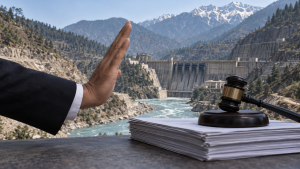
India reiterated that it did not recognise the authority of an arbitration court dealing with hydropower matters concerning Jammu and Kashmir, and did not accept its orders as binding.
India’s stated position
The report said operational data concerning the Baglihar project and Kishanganga project had been sought. It also referred to older Kishanganga–Ratle proceedings but did not clearly establish the formal case caption or the tribunal’s current proceedings.
Important Facts for Exams
- Minimum river flow: The Kishanganga tribunal required a minimum flow of 9 cumecs to be maintained at all times.
- Dead-storage outlets: For Kishanganga and Ratle, the second tribunal allowed outlets below dead-storage level only when equally effective alternatives were inadequate.
- Treaty dispute pathway: The Indus Waters Treaty routes unresolved questions through the Permanent Indus Commission; technical differences may go to a Neutral Expert, while disputes may reach a Court of Arbitration.
- Baglihar determination: The Baglihar dispute was decided by a Neutral Expert under the treaty, rather than by a Court of Arbitration; the determination was issued in 2007.
Originally written on
February 3, 2026
and last modified on
November 19, 2026.
| Related | |
|---|---|