ICAR-NBPGR Study Identifies Rice Diversity in Uttarakhand
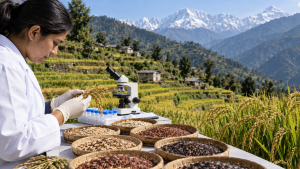
A study by scientists from ICAR–National Bureau of Plant Genetic Resources (NBPGR) and associate institutions examined 9,172 traditional and indigenous rice varieties from the hilly areas of Himalayan states. Published in Scientific Reports on September 28, 2026, it covered material collected from 11 states and regions, including Uttarakhand.
Rice varieties recorded in Uttarakhand
Of 1,698 rice varieties collected from Uttarakhand, researchers identified 372 japonica rice varieties and 432 mixed-type varieties. The wider study included collections from Arunachal Pradesh, Himachal Pradesh, Jammu and Kashmir, Bihar, Jharkhand, Manipur, Mizoram, Nagaland, Meghalaya and Tripura, as well as Uttarakhand.
S5ⁿ allele and breeding potential
Researchers found the S5ⁿ wide-compatibility allele in 150 Uttarakhand varieties. They identified it as a genetic resource that may support future breeding between indica rice and japonica rice, potentially producing fertile hybrid seeds with higher yields and tolerance to drought, floods and extreme heat.
Important Facts for Exams
- Subgroups: Japonica rice is classified into temperate japonica, tropical japonica and aromatic subgroups.
- Grain traits: Japonica rice grains are generally rounder, thicker and harder than the longer, thinner grains typical of indica rice.
- S5 hybrid-sterility mechanism: At rice chromosome 6’s S5 locus, incompatible indica and japonica alleles can cause female-gamete abortion; S5-n is associated with compatibility.
- Germplasm conservation facilities: ICAR–NBPGR’s National Gene Bank conserves plant genetic resources through seed, in-vitro, cryopreservation and field genebank facilities.
| Related | |
|---|---|