Himalayan Serow Sighted in Himachal Pradesh After Two Decades
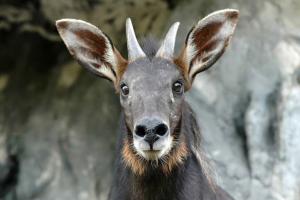
The Himalayan Serow, scientifically known as Capricornis thar, was video-recorded in the Dalhousie catchment forests of Himachal Pradesh on 4 August 2026 after a gap of two decades. The sighting occurred in a forest landscape adjoining the Kalatop-Khajjiar Wildlife Sanctuary in the Western Himalayas.
Himalayan Serow: Species Profile
The Himalayan Serow is a medium-sized ungulate found in the Himalayan region and parts of South and South-East Asia. It belongs to the genus Capricornis, which includes serows, a group of goat-antelopes adapted to rugged terrain and forested slopes. The species is known for its dark coat, short horns, and preference for steep, rocky habitats.
Conservation Status and Legal Protection
The Himalayan Serow is classified as Near Threatened on the IUCN Red List. Its population faces pressures from habitat degradation, habitat fragmentation, and hunting. In India, the species is listed under Schedule I of the Wildlife Protection Act, 1972, which provides the highest level of legal protection for wild animals.
Himachal Pradesh Records and Habitat Range
The Dalhousie record is the first confirmed visual documentation of the species from that landscape in over 20 years. Earlier, a serow was sighted near Hurling village in Spiti around 25 December 2020, which was noted as the first recorded human sighting of a serow in Himachal Pradesh. The Spiti sighting was unusual because serows are generally associated with forested Himalayan slopes and are not typical of cold desert zones at very high elevations.
Important Facts for Exams
- The Himalayan Serow is the state animal of Mizoram.
- The species is also found in Nepal, Bhutan, north-eastern India, and parts of Myanmar and China.
- Schedule I of the Wildlife Protection Act, 1972, includes species with the highest legal protection in India.
- IUCN stands for the International Union for Conservation of Nature.
Wildlife Monitoring in the Western Himalayas
The video record from Dalhousie provides baseline evidence for species distribution studies in the Western Himalayas. Forest patrols and camera traps are commonly used in India for documenting elusive mammals in protected and adjoining forest areas.
| Related | |
|---|---|