Page-7 of GS-I: Modern World History
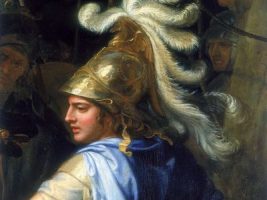
Alexander
Alexander is a male given name of ancient Greek origin, historically associated with leadership, warfare, protection and royal authority. The most famous bearer is Alexander the Great, king...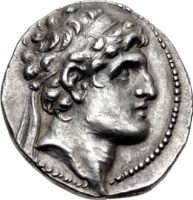
Alexander Balas
Alexander I Theopator Euergetes, commonly known as Alexander Balas, was a ruler of the Seleucid Empire whose short but eventful reign from 150 BC to 145 BC marked...
Alexander Kerensky
Alexander Fyodorovich Kerensky was a Russian lawyer, orator, and revolutionary who became a central figure in the dramatic political upheavals of 1917. Serving first as Minister of Justice,...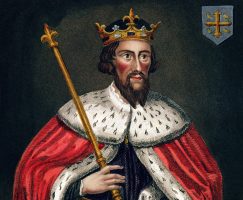
Alfred the Great
Alfred the Great was King of the West Saxons from 871 to 886 and the first ruler to bear the title King of the Anglo-Saxons from 886 until...
Almoravid dynasty
The Almoravid dynasty was a Berber-led Islamic power that rose from the Sahara in the mid-eleventh century and went on to establish a major empire across the western...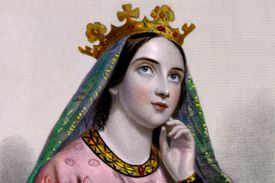
Amalasuintha
Amalasuintha (also rendered Amalasuentha, Amalaswintha, Amalswinthe, Amalasontha, Amalasiuntha, and Amalsenta; 495 – 30 April 535) was queen of the Ostrogothic Kingdom and one of the most prominent female...
Amber Road
The Amber Road was an ancient network of long-distance trade routes that facilitated the movement of amber from the coastal regions of the North Sea and the Baltic...
Ambiorix
Ambiorix was a prominent leader of the Eburones, a Belgic tribe of north-eastern Gaul in the region corresponding largely to modern Belgium. Alongside Catuvolcus, he ruled the tribe...
Amphipolis
Amphipolis was an influential polis of ancient Greece and later an important Roman urban centre, situated in the region historically known as Edonis in northern Greece. Its archaeological...
Ancient Egypt
Ancient Egypt was one of the world’s earliest and most enduring civilizations, centred along the fertile lower reaches of the Nile River in Northeast Africa. Emerging from prehistoric...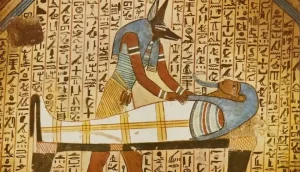
Ancient Egyptian religion
Ancient Egyptian religion was a vast, intricate system of polytheistic beliefs and ritual practices that evolved over more than three and a half millennia. Deeply embedded in every...