Camera Traps Photograph Three Juvenile Melanistic Tigers in Similipal
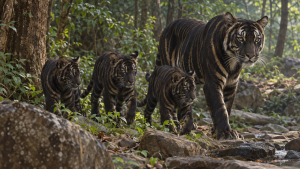
On 4 June 2026, camera-trap photographs from Similipal Tiger Reserve in Odisha showed tigress T20 with her three juvenile melanistic cubs in the forest.
Tigress T20 and her cubs
Similipal authorities estimated the cubs to be 11–12 months old and confirmed they were healthy and well-adapted to their natural surroundings. They were born during the preceding year. Prakash Chand Gogineni, Field Director of Similipal Tiger Reserve, confirmed the sighting and expressed optimism about their survival.
Melanism in the tigers
The photographs document melanistic Bengal tigers, a genetic variant caused by a recessive mutation in the Taqpep gene. The mutation broadens and merges the stripes, making the tigers appear almost entirely black.
Important Facts for Exams
- Taxonomic placement: In the 2017 taxonomic revision, living and extinct continental Asian tiger populations were subsumed under Panthera tigris tigris.
- White coat mutation: The Bengal tiger’s white coat is a recessive mutant form, not albinism; white tigers have been reported in the wild in parts of India.
- Golden coat mutation: Golden tigers are another recessive mutant, with pale golden fur and red-brown stripes; the source describes these mutants as very rare in nature.
- Similipal habitat classification: Similipal is listed among tiger conservation units in tropical moist deciduous forest, a habitat type described as productive for tigers and their prey.
Category: Odisha
Originally written on
June 4, 2026
and last modified on
November 20, 2026.
| Related | |
|---|---|