BHU opens 22 boxes of Rajghat excavation material
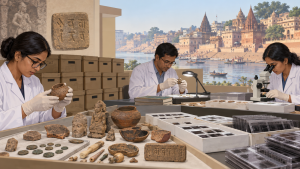
Banaras Hindu University (BHU) opened 22 boxes of archaeological material from Rajghat in Varanasi, Uttar Pradesh, on 20 August 2026. The boxes held material from earlier excavations; this was a reopening and documentation effort, not a new excavation.
Contents of the boxes
The boxes contained more than 10,000 artefacts, about 3,000 glass slides and over 5,000 photographic negatives. Finds include pottery, coins, sculptures, tools and objects made of copper, ivory and bone. Some seals bear inscriptions in Brahmi script.
Research and conservation
BHU formed three research teams to identify, document and conserve the material. Their work was planned or ongoing at the time of the box-opening.
Important Facts for Exams
- Brahmi vowel notation: Brahmi is an abugida: diacritical marks associate vowel sounds with consonant symbols.
- Palaeographic dating: Brahmi inscriptions are often dated palaeographically by comparing letter forms, a method that usually yields broad periods rather than precise calendar dates.
- Negative formats: Photographic negatives may use glass plates or flexible film; identifying the support is essential because each format requires different handling and storage.
Category: Uttar Pradesh
Originally written on
August 20, 2026
and last modified on
November 21, 2026.
| Related | |
|---|---|