Batukeshwar Dutt’s role in India’s freedom struggle
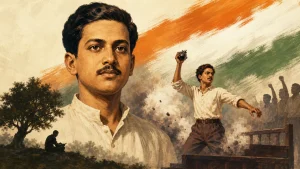
Batukeshwar Dutt was born in 1910 in Bardhaman, then in Bengal. He worked with Bhagat Singh and other revolutionaries in the freedom struggle. On 8 April 1929, Dutt and Bhagat Singh threw bombs in the British Assembly in Delhi to protest the Public Safety Bill and Trade Disputes Bill. They were arrested. Dutt was later tried in the Lahore conspiracy case and sentenced to life imprisonment; he was sent to the Cellular Jail in the Andaman Islands. After his release, he settled in Bihar. Dutt died on 20 July 1965. He was buried at Hussainiwala in Punjab, alongside Bhagat Singh, Sukhdev and Rajguru.
Notable Points
- Assembly action, 1929: On 8 April 1929, Batukeshwar Dutt and Bhagat Singh threw two bombs at empty benches in the Central Legislative Assembly. They stayed, raised slogans and distributed leaflets instead of escaping. One leaflet was titled To Make the Deaf Hear.
- Trial and later Bihar activity: Dutt received a life sentence in 1929 in the Central Assembly Bomb Case and was sent to Cellular Jail in the Andaman and Nicobar Islands. After his release, he joined the Quit India Movement and was jailed for four years at Motihari Jail in Bihar’s Champaran district.
- HRA and HSRA: The Hindustan Republican Association’s manifesto, Revolutionary, was written by Sachindra Nath Sanyal and distributed in North Indian cities on 1 January 1925. It proposed a Federal Republic of the United States of India and universal suffrage. In September 1928, revolutionary groups and the HRA met at Feroz Shah Kotla in Delhi, leading to the Hindustan Socialist Republican Association.
Category: Bihar
Originally written on
November 19, 2026
and last modified on
November 19, 2026.
| Related | |
|---|---|