Ayodhya Ram Temple Opens Circumambulatory Corridor
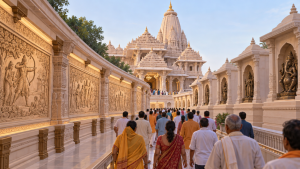
The Ram temple complex in Ayodhya, Uttar Pradesh, opened its circumambulatory corridor to general devotees without a special pass. The development was reported on 8 May 2026.
Access to subsidiary temples
The corridor gives devotees access to six subsidiary temples dedicated to Lord Ganesh, Hanuman, Lord Surya, Mata Jagadamba, Maa Annapurna Devi and Lord Bholenath. The opening for general devotees followed consent from security officials.
Murals and crowd management
The route features 87 stone murals, each 6 feet long, 5 feet high and 2.5 feet thick, depicting episodes from the Ramayana. About 80 bronze panels showing historical themes from across India are also installed along the corridor. The Shri Ram Janmabhoomi Teerth Kshetra Trust said access may be restricted if crowd levels increase.
Important Facts for Exams
- Architectural style: The Ram Mandir follows the Maru-Gurjara architecture of the Nagara style, a Hindu temple tradition found mainly in northern India.
- Stone construction: The Ram Mandir uses no iron or steel; copper plates fuse its stone blocks.
- Foundation design: The Ram Mandir’s foundation includes a 14-metre roller-compacted concrete layer resembling artificial rock, with a granite plinth for moisture protection.
- Sanctum layout: The Ram Mandir’s main structure stands on a raised three-storey platform, with five mandapas around the sanctum and entrance passage.
Category: Uttar Pradesh
Originally written on
May 8, 2026
and last modified on
November 19, 2026.
| Related | |
|---|---|