Assam Records 3,260 One-Horned Rhinos
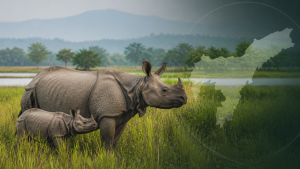
Assam had 3,260 one-horned rhinoceroses as of September 2026, and this figure formed about 80% of the global population of the greater one-horned rhinoceros. The global population reached 4,075 individuals in 2026, while India had an estimated 3,323 rhinos and Nepal had around 752.
Greater One-Horned Rhinoceros
The greater one-horned rhinoceros is also called the Indian rhinoceros and carries the scientific name Rhinoceros unicornis. It is listed as Vulnerable on the IUCN Red List and is native to the floodplains and grasslands of the Indian subcontinent.
Rhino Habitat in Assam
Kaziranga National Park in Assam shelters more than 2,600 rhinos and remains the largest stronghold of the species. Manas National Park in Assam had an estimated 40 to 50 rhinos as of September 2026, and both parks are important habitats in the Brahmaputra valley landscape.
Conservation and Protection Measures
Assam recorded zero incidents of rhino poaching in 2025, and the state reported an 86% drop in poaching since 2016. Rhino protection in Assam involves anti-poaching patrols, habitat management, and legal protection under Indian wildlife law.
Important Facts for Exams
- The greater one-horned rhinoceros is one of three Asian rhino species, along with the Javan rhinoceros and the Sumatran rhinoceros.
- Kaziranga National Park is a UNESCO World Heritage Site in Assam.
- Manas National Park is both a National Park and a Tiger Reserve in Assam.
- The greater one-horned rhinoceros is the state animal of Assam.
Distribution in South Asia
The greater one-horned rhinoceros survives mainly in India and Nepal, with Assam holding the largest share of the world population. The species depends on alluvial grasslands, wetlands, and riverine forests for feeding and breeding.
| Related | |
|---|---|