Indian Space Research Organisation (ISRO) has been selected for the Gandhi Peace Prize for the year 2014. It was announced by the jury for the Prize which had...
Accountability is a mechanism designed to ensure that the affairs or the entities are conducted with due regard to the interests of those who are interested in the...
An ethical dilemma is a decision that needs a choice among various principles, mostly in difficult and importance contexts. Personal self-interest should be secondary to the common good...
The Public service system like Civil service, Policing, and other government officials is the backbone of the administrative system which acts as most important tool for governance of...
Lawrence Kohlberg stressed that moral development primarily involves moral reasoning and occurs in stages. A key concept in understanding progression through the levels and stages is that their...
Utilitarianism, as expounded by John Stuart Mill (1806–1873), is a moral and political philosophy asserting that the rightness or wrongness of actions depends on their consequences, specifically in...
The three postulates of morality are given by Immanuel Kant. They have been discussed as below: Immortality of the Soul Kant states in his critique, “the belief in God...
Kant laid the foundations in Critique of Pure Reason (1781) about moral of knowledge. It stated about the moral of knowledge as one of the two things that filled...
According to Kant, the one unconditionally good thing is a good will despite all encroachments. When we act, consequences of our actions lies beyond our control, but the...
Imperatives are formula of a reason that determines the will of the action. Imperatives can be expressed in terms of what ought to do. All imperatives are communicated...
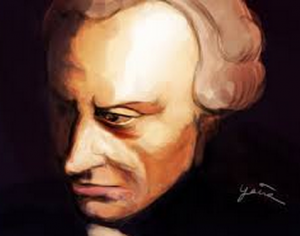
Immanuel Kant (1724 – 1804) was a German philosopher and is considered one of the central figures in modern philosophy. Kantianism Kant believed that people’s actions should to be guided by...
Kantian Ethics, developed by the German philosopher Immanuel Kant (1724–1804), represents one of the most influential moral theories in Western philosophy. It emphasises duty, rationality, and the moral...