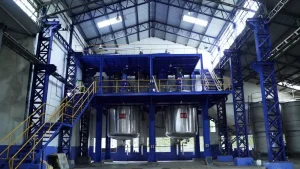
As per recent study conducted by Assocham-KPMG, India has emerged as the world’s fifth largest electronic waste (e-waste) producer. India discards roughly 18.5 lakh tonnes of e-waste each...
In February 2016, the Ministry of Environment, Forest and Climate Change (MoEFCC) unveiled a new categorization of industries based on their pollution load. The new classification is for...
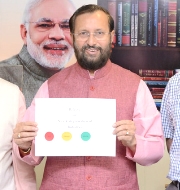
The Union Ministry of Environment, Forest and Climate Change (MoEFCC) has released a new Four-colour Classification Scheme for industries based on their pollution potential. The four-colour classification scheme...
The Central Pollution Control Board (CPCB) has released National Air Quality Indices (AQI) for 24 cities across India in the month of January 2016. In the list Varanasi...
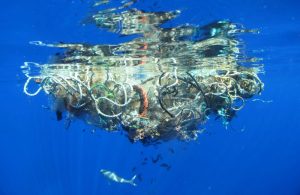
As per recently released World Economic Forum (WEF) report, oceans will have more plastics than fish by 2050 if the ongoing practice of dumping plastics continues. This report...
Bharat Stage Emission Standards (BSES) are regulatory norms set by the Government of India to control the output of air pollutants from internal combustion engine equipment, including vehicles....
Central Pollution Control Board (CPCB) with the help of concerned State Pollution Control Boards (SPCBs) and Pollution Control Committees (PCCs) is monitoring the ambient air quality in the...
The Air (Prevention and Control of Pollution) Act 1981 was enacted to prevent, control and abate air pollution in India. It was introduced to address the increasing levels...
Thermal pollution refers to degradation of water quality caused by changes to the ambient water temperature. Common causes include the discharge of cooling water by power plants and...
Spread of chemicals, particles, industrial, agricultural and residential waste, noise or the invasive organisms in the marine is the Marine Pollution. Toxins bioaccumulate in Zooplankton and phytoplankton and...
Persistence is an important characteristic of the environmental pollutants in an environmental medium (air/ water/ soil) or in a living tissue, in which the pollutants remain active for...
Almost 70 per cent of India’s surface water resources and a growing percentage of its groundwater reserves are contaminated by biological, toxic organic and inorganic pollutants. In many...