Medical Challenges of Human Spaceflight
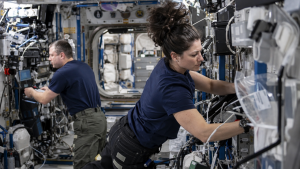
Astronauts face a combination of physiological, environmental and psychological stresses that differ sharply from those experienced on Earth. Understanding these risks is essential to protecting crew health and building the medical capacity needed for longer human space missions.
The Spaceflight Environment
Microgravity changes how the body experiences movement and physical load, while radiation, confinement and disrupted light-dark cycles add further stress. Spacecraft also have limited medical resources, and distance from Earth can delay or restrict emergency support. These challenges make prevention, health monitoring and crew training central to mission planning.
Physiological Adaptations and Risks
The body adapts to weightlessness in ways that can affect several systems:
- Cardiovascular system: Fluids shift towards the head and chest, contributing to reduced blood volume and, in some cases, cardiac atrophy. On return to gravity, astronauts may experience orthostatic intolerance—the difficulty of maintaining blood pressure when standing upright.
- Bones and muscles: Weight-bearing bones can lose about 1–1.5% of their mineral density per month. Muscle atrophy and strength loss are also concerns, particularly in muscles normally used to oppose gravity.
- Balance and orientation: Space Adaptation Syndrome, also called space sickness, can cause nausea, disorientation and impaired balance, especially during the initial period of adaptation.
- Vision: Spaceflight-associated Neuro-ocular Syndrome (SANS) can involve optic disc oedema, choroidal folds and a shift towards farsighted vision. Its causes are still being investigated; changes in intracranial pressure may be involved.
- Other health effects: Immune changes may increase susceptibility to infection or reactivate latent viruses. Kidney stone formation is another recognised risk.
Space Radiation
Space radiation includes Galactic Cosmic Rays (GCRs), high-energy particles originating beyond the solar system, and Solar Particle Events (SPEs), bursts of energetic particles from the Sun. GCR exposure is persistent and difficult to shield against; an SPE can deliver a high dose over a short period. Potential health effects include a higher risk of cancer, damage to the central nervous system that may affect cognition or motor function, and degenerative effects involving tissues, the cardiovascular system and the eyes. A large, inadequately shielded SPE can also pose a risk of acute radiation sickness. Personal dosimeters help monitor astronaut exposure and inform research into shielding and other protective measures.
Psychological and Behavioural Health
Long periods in a confined habitat can bring monotony, reduced privacy and limited sensory variety. Disrupted sleep, demanding workloads, performance pressure, risk of equipment failure or injury, and separation from family and social networks can add to the strain.
- Possible effects: Anxiety, depression, irritability, low morale, interpersonal conflict and reduced cognitive performance.
- Preparation: Pre-flight psychological screening and training help crews prepare for isolation and operational stress.
- In-flight support: Psychological assistance, crew-cohesion activities and scheduled communication with Earth can help maintain well-being and teamwork.
Countermeasures and Aerospace Medicine
Spaceflight countermeasures combine exercise, nutrition, medical support and spacecraft systems. Exercise is a key defence against deconditioning; routines may involve about two hours a day using specialised equipment.
- Exercise: Treadmills, cycle ergometers and resistive devices help maintain bone, muscle and cardiovascular health.
- Nutrition and medicines: Balanced diets and targeted supplements, including vitamins D and K, support bone health and other bodily functions. Bisphosphonates may be used to mitigate bone loss, while antiemetics can help manage space sickness.
- Life-support systems: Environmental Control and Life Support Systems (ECLSS) manage air quality, temperature, humidity, water recycling and waste.
- Medical care: Onboard medical kits support treatment of a range of emergencies. Telemedicine enables remote consultation with ground-based flight surgeons.
- Research: Advanced radiation protection, active shielding and centrifuges for artificial gravity are among the approaches being explored to address spaceflight risks.
Aerospace medicine applies human-factors knowledge to the health and safety of pilots, aircrews and astronauts. Military practitioners are generally called flight surgeons and accumulate flight hours as part of their role; civilian practitioners are known as aviation medical examiners. Aeromedical transport specialists help protect aircrew and patients during air evacuation by helicopter or fixed-wing aircraft. India’s Institute of Aerospace Medicine (IAM) in Bengaluru is a primary centre for aeromedical activities, providing medical support for indigenous aircraft development and the national human spaceflight programme. ISRO’s Human Spaceflight Centre (HSFC) oversees medical aspects of Gaganyaan, including astronaut selection, training and health monitoring. Globally, NASA’s Human Research Program studies and seeks to mitigate risks to astronaut health and performance; the European Astronaut Centre supports astronaut selection, training and medical operations. Space medicine links research on human physiology with science and technology capacity. Its progress is important not only for crew safety but also for developing the systems, expertise and medical support needed for sustained human activity in space.
Key Prelims Takeaways
- Cephalic fluid shift: Movement of body fluids towards the head and chest in microgravity.
- Orthostatic intolerance: Difficulty maintaining an upright posture after return to gravity.
- SANS: May involve optic disc oedema, choroidal folds and a hyperopic vision shift.
- Radiation: GCRs are persistent; SPEs can deliver intense doses over short periods.
- ECLSS and telemedicine: Support spacecraft life systems and remote medical consultation, respectively.
- Indian institutions: HSFC manages Gaganyaan’s medical aspects; IAM Bengaluru supports aeromedical activities.
Recent Context
The 65th Annual Conference of the Indian Society of Aerospace Medicine is being held in Bengaluru on November 26–27, 2026. Its theme, “One Airspace – One Mission: Aeromedical Support from Runway to Orbit,” connects military aviation, civil aviation and human spaceflight. The programme includes the inaugural Cosmonaut Rakesh Sharma Lecture and over 100 research papers.
| Related | |
|---|---|