Major International Initiatives for Women’s Participation in Peacebuilding
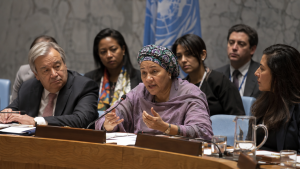
Women’s participation in peacebuilding is central to conflict prevention, negotiation and recovery. International frameworks, UN bodies and civil-society networks seek to advance women’s leadership, protect their rights and make peace processes more inclusive.
UN Security Council Resolution 1325 and the WPS Agenda
Adopted unanimously on October 31, 2000, UN Security Council Resolution 1325 (UNSCR 1325) recognized the disproportionate impact of armed conflict on women and girls and affirmed their vital contributions to peacebuilding, conflict prevention and post-conflict recovery. It is the first formal and legal Security Council document requiring parties to a conflict to prevent violations of women’s rights and support women’s participation in peace and security efforts. The resolution calls for women’s participation in peace negotiations and post-conflict reconstruction, and for the protection of women and girls from wartime sexual violence. It also requires a gender perspective in addressing their specific needs during conflict and in repatriation, resettlement, rehabilitation, reintegration and reconstruction. These provisions connect protection with participation: women are not only affected by conflict but are also agents in resolving it. Nine subsequent Security Council resolutions have built on UNSCR 1325, forming the Women, Peace and Security (WPS) agenda. More than 100 countries and numerous regional organizations have adopted National Action Plans (NAPs) to implement it. NAPs aim to strengthen women’s roles in conflict prevention and increase their participation in peacebuilding. Implementation remains uneven. In 2025, women accounted for an average of 5% of negotiators across 57 peace processes, down from 7% in 2024. Only 19% of peace agreements in 2025 referred to women, girls, gender or sexual violence. These figures highlight the gap between formal commitments and women’s representation in negotiations and agreements.
- Core areas: The WPS agenda links participation in decision-making with conflict prevention, protection from conflict-related harm and support for relief and recovery.
- Peacebuilding significance: Including women in negotiations and reconstruction can make conflict resolution more representative and support inclusive governance.
United Nations Initiatives and Bodies
UN entities advance the WPS agenda through policy support, peacekeeping, development programmes and funding for women-led work.
- UN Women: Supports women’s voices in crises, documents atrocities, invests in women-led peace initiatives and works with governments on policy reform.
- United Nations Peacebuilding Fund (PBF): Approved USD 124 million for initiatives in 28 countries in 2025, with more than 38% allocated to gender equality. It has exceeded its internal gender-equality allocation target for seven consecutive years.
- Women’s Peace and Humanitarian Fund (WPHF): This global financing mechanism supports local and grassroots women’s organizations in conflict and crisis settings. Since 2016, it has mobilized more than USD 276 million and supported over 1,800 local women’s organizations.
- Elsie Initiative Fund for Uniformed Women in Peace Operations (EIF): A UN Trust Fund seeking full, equal and meaningful participation of uniformed women in UN peace operations. It has supported 22 security institutions in 19 countries.
- United Nations Development Programme (UNDP): Supports women’s participation in politics, civil society and peacebuilding. Its work also includes preventing gender-based violence and addressing conflict’s root causes through a gender perspective.
- Department of Peace Operations (DPO): Leads implementation of WPS resolutions within UN peacekeeping, focusing on integrating women’s priorities into peace and security decisions and advancing gender equality in operations.
International Non-Governmental Organizations and Networks
International civil-society organizations support women peacebuilders, connect women from conflict-affected communities and advocate for women’s representation in mediation and peace processes.
- Global Network of Women Peacebuilders (GNWP): A coalition of more than 100 women’s organizations from over 40 countries experiencing conflict or humanitarian crises. It works to build equal, resilient and peaceful communities.
- Women’s International League for Peace and Freedom (WILPF): Founded during World War I, it is the world’s longest-standing women’s peace organization. It uses feminist analysis and advocacy to address the causes of war.
- PeaceWomen Across the Globe: Networks and supports women from war-affected regions as they advocate for their rights and participation in peace processes.
- Women in Peacebuilding and Leadership (WIPL): An initiative of Mediators Beyond Borders International that advocates for women’s effective participation, leadership and representation in mediation, dialogue and peacebuilding.
Key Prelims Takeaways
- UNSCR 1325 was adopted unanimously on October 31, 2000, and is the first Security Council resolution on Women, Peace and Security.
- Nine subsequent Security Council resolutions form the broader WPS agenda; more than 100 countries have adopted WPS National Action Plans.
- In 2025, women were 5% of negotiators across 57 peace processes, compared with 7% in 2024.
- Only 19% of peace agreements in 2025 referred to women, girls, gender or sexual violence.
- The PBF approved USD 124 million for 28 countries in 2025, allocating over 38% to gender equality.
- Since 2016, the WPHF has mobilized over USD 276 million and supported more than 1,800 local women’s organizations.
- Key civil-society networks include GNWP, WILPF, PeaceWomen Across the Globe and WIPL.
Recent Context
The 2025 Indira Gandhi Prize for Peace, Disarmament and Development was presented to Graça Machel on November 19, 2026. Her work on the impact of armed conflict on children highlights the importance of protecting vulnerable groups in conflict settings.
| Related | |
|---|---|