Major Ecosystem Engineers and Their Ecological Roles
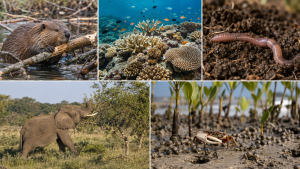
Ecosystem engineers are organisms that modify, create or maintain physical features of their surroundings, changing the resources and habitats available to other species. Their effects can shape water flow, soils, vegetation and biodiversity, making them important to ecosystem function and restoration.
Types of Ecosystem Engineers
Ecosystem engineers alter their environment in ways that substantially affect other organisms. They are distinguished from species that simply occupy a habitat and are grouped by how they bring about environmental change:
- Allogenic engineers: They transform living or non-living materials from one physical state to another. Beavers felling trees and earthworms burrowing through soil are examples.
- Autogenic engineers: Their own physical growth or structures modify the habitat. Trees provide shade and structure, while corals build reefs.
Some ecosystem engineers also function as keystone species, whose presence has a disproportionately large influence on ecosystem health and stability. Their removal can therefore lead to substantial ecological changes.
Beavers: Allogenic Engineers
Beavers (Castor fiber in Eurasia and Castor canadensis in North America) build dams from branches, vegetation, rocks and mud. By restricting water flow, dams create ponds that often contain beaver lodges. Bank lodges are shore burrows covered with sticks; open-water lodges are built on piled stick platforms.
- Water storage and flow: Dams create wetlands, stabilise stream flows and increase water storage. They can help mitigate drought and flood impacts and enhance groundwater recharge.
- Habitat creation: Ponds and wetlands formed from fast-flowing streams provide varied habitats for fish, amphibians, waterfowl and invertebrates.
- Water quality: Dams trap sediment, pollutants and excess nutrients, acting as natural filters.
- Vegetation change: Tree felling for food and construction alters vegetation along waterways.
- Territorial behaviour: European beavers mark boundaries with castoreum-rich deposits on mud mounds. These scent marks signal occupancy and help reduce encounters between neighbouring family groups. Young beavers typically leave their family territory at around two years of age to establish their own.
Other Major Ecosystem Engineers
- Elephants: African and Asian elephants push down trees, opening clearings that allow sunlight to reach the forest floor and support new plant growth. They dig waterholes in dry riverbeds and disperse seeds over long distances through their dung.
- Prairie dogs: These North American rodents construct extensive burrow systems, sometimes 7–15 feet deep, across large “dog towns”. Burrowing aerates soil, improves water infiltration and redistributes nutrients. The burrows shelter species such as burrowing owls and black-footed ferrets, while grazing helps maintain short grasslands and encourages plant diversity.
- Corals: Hard corals are autogenic engineers that build three-dimensional calcium carbonate reefs. Reefs provide habitat, shelter and feeding grounds for thousands of marine species. They also act as natural breakwaters, helping protect coasts from erosion and storm surges.
- Earthworms: Their burrowing, or bioturbation, mixes soil layers and improves soil structure, aeration, drainage and water infiltration. By consuming organic matter, earthworms accelerate decomposition and nutrient cycling, contributing to soil fertility.
- Mangroves: These intertidal trees stabilise tropical and subtropical shorelines. Their dense roots trap sediment, limit erosion and contribute to land building. Mangrove forests provide nursery grounds for fish and shellfish, reduce the force of waves and wind, and support diverse wildlife.
- Termites and ants: These social insects build mounds and underground tunnel networks that mix soil and alter its texture and chemistry. Their activity improves aeration and water infiltration. Termite mounds can form nutrient-rich hotspots and microhabitats, while the insects’ role in decomposition supports nutrient cycling.
Ecological Importance and Restoration
By changing the physical structure of an ecosystem, engineers increase habitat heterogeneity and create microhabitats and niches for other species. Their effects on water, light, nutrients and soil influence processes such as nutrient cycling, sediment movement and hydrological regimes. These changes can support biodiversity and ecosystem resilience.
Recognising these roles is relevant to ecosystem restoration and biodiversity conservation: protecting or restoring the processes created by ecosystem engineers can help sustain habitats. Beaver wetlands and mangrove shorelines also illustrate nature-based solutions, providing water-management and coastal-protection benefits through natural processes.
Key Prelims Takeaways
- Definition: Ecosystem engineers modify physical environments in ways that affect other organisms.
- Classification: Allogenic engineers transform materials; autogenic engineers modify habitats through their own structures or growth.
- Beavers: Dams create ponds and wetlands, affect water flow and trap sediment and pollutants.
- Elephants and prairie dogs: They alter vegetation and soils, respectively, while also creating resources or shelter for other species.
- Corals and mangroves: Reefs and root systems provide habitat and help protect coasts.
- Soil engineers: Earthworms, termites and ants affect soil structure, aeration, water movement and nutrient cycling.
- Ecosystem effects: Engineering can increase habitat diversity, support biodiversity and contribute to ecosystem resilience.
Recent Context
The beaver population in Scotland’s Cairngorms National Park reached 78 by October 2026, with 35 wild-born kits recorded between 2024 and 2026 and 16 confirmed or suspected breeding territories. By 23 November 2026, 49 beavers had been released into the Upper Spey catchment; the reintroduction project received an RSPB Scotland Nature of Scotland Award.
| Related | |
|---|---|