Kaveri Engine
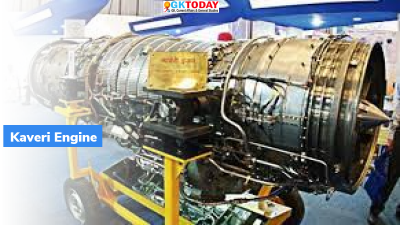
The Kaveri engine is India’s ambitious project to develop an indigenous low-bypass twin-spool turbofan engine. Developed by the Gas Turbine Research Establishment (GTRE) under the DRDO, it was originally intended to power the Light Combat Aircraft (LCA) Tejas. While the original program faced technical hurdles, it has evolved into a family of engines, including “dry” variants for drones and “Kaveri 2.0” for future fighters.
Technical Specifications and Performance
The engine was designed to handle the high-temperature and high-altitude conditions of the Indian subcontinent. It features a six-stage core high-pressure compressor and a three-stage low-pressure compressor.
| Feature | Specification (Baseline Kaveri) | Target (Kaveri 2.0 / Upgraded) |
| Type | Afterburning Turbofan | Advanced Afterburning Turbofan |
| Dry Thrust | ~48–51 kN | 55–59 kN |
| Afterburning Thrust | ~70–75 kN | 90–100 kN |
| Thrust-to-Weight Ratio | 4.8:1 | Target > 7:1 |
| Application | LCA Tejas (Original plan) | Tejas Mk2 / AMCA / Ghatak UCAV |
Evolution of the Project: From Fighter to Stealth Drone
The Kaveri project has pivoted to ensure the technology developed is utilized effectively across different platforms.
The Kaveri Dry Engine (KDE)
A “dry” engine operates without an afterburner. This variant is optimized for the Ghatak Stealth Unmanned Combat Aerial Vehicle (UCAV). By removing the afterburner, the engine gains fuel efficiency and a lower infrared signature, which is essential for stealth missions. As of 2026, the KDE is nearing final certification following successful high-altitude trials on an Il-76 testbed.
Kaveri 2.0 Initiative
The GTRE is currently working on “Kaveri 2.0,” which incorporates improved core structures and advanced materials. This version aims to reach the 90–100 kN thrust class. This output would place it in the same league as the GE F414 engine, potentially allowing it to replace foreign powerplants in future batches of the Tejas Mk2.
Tejas Mk2: The Strategic Dependency
The Tejas Mk2, also known as the Medium Weight Fighter (MWF), is a larger and more capable evolution of the Tejas Mk1. While the first flight is expected in mid-2026, its initial operational life depends on the American GE F414-INS6 engine.
- Foreign Dependency Risks: Relying on GE F414 engines makes India’s frontline fleet vulnerable to supply chain disruptions or export controls.
- Performance Constraints: Foreign engines are often optimized for temperate climates. An indigenous engine can be “flat-rated” to maintain peak performance in India’s hot and humid coastal regions or the thin air of the Himalayas.
- Cost Efficiency: Indigenous production removes the high cost of royalties and foreign exchange fluctuations associated with importing high-tech components.
Collaboration with Safran and Global Partnerships
To overcome the “heat barrier” and “screeching” (unstable combustion) issues of earlier prototypes, India has engaged with France’s Safran.
- Technology Transfer: The partnership focuses on “hot-section” technologies, including single-crystal turbine blades that can withstand temperatures exceeding their melting point.
- Intellectual Property (IP): Recent agreements ensure that the IP for new co-developed engines, such as the 120 kN engine for the AMCA, will remain with India.
- Infrastructure: India is establishing a domestic aero-engine testing complex to bridge the gap in ground-testing facilities, which previously forced engineers to send prototypes to Russia for validation.
Future Milestones and Integration
The success of the Kaveri program is a prerequisite for India’s 5th-generation Advanced Medium Combat Aircraft (AMCA) and the Twin-Engine Deck Based Fighter (TEDBF) for the Navy.
- 2026 Certification: Target for the Kaveri Dry Engine to power the Ghatak UCAV.
- Serial Production: Private sector players like Godrej Aerospace are now assembling full engine units, moving the project from R&D to industrial scale.
- Strategic Autonomy: Mastery of jet engine technology is the final frontier in aerospace, achieved only by the US, Russia, France, and the UK. A functional Kaveri engine secures India’s status as a global aerospace power.