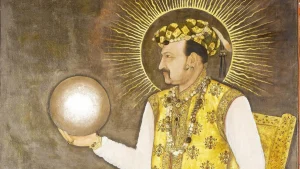
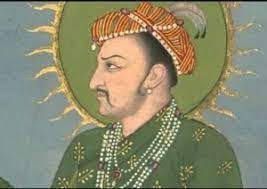
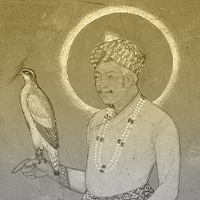
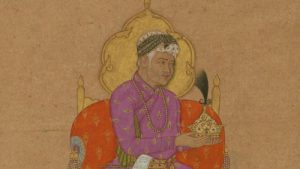
Jahangir, originally named Nur-ud-din Muhammad Salim, was the fourth Mughal emperor of India, ruling from 1605 to 1627. The son of Emperor Akbar and Maharani Jodha Bai, Jahangir’s...
The later years of Emperor Akbar, the third ruler of the Mughal Empire, were marked by political strain, familial discord, and declining health. Revered as one of the...
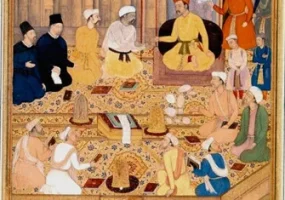
Akbar was an ardent admirer of art and learning. His court was full of many scholars and talented artists. The Nine most learned men in his court were...
Din-e-Ilahi, meaning the ‘Religion of God’, was a syncretic religious doctrine introduced by the Mughal Emperor Akbar in 1582 CE. It aimed to combine the best moral and...
The Mahzar Nama (Persian: Mahzar-nāma, meaning “Document of Manifestation” or “Declaration”) was a theological and political proclamation issued by the Mughal Emperor Akbar in 1579 CE. It is...
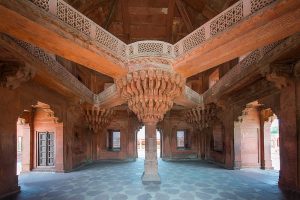
Fatehpur Sikri, located about 40 kilometres west of Agra in Uttar Pradesh, is one of the finest examples of Mughal architecture and urban planning in India. Built by...
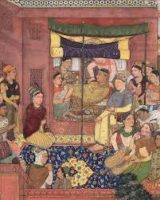
The birth of Salim, who later became the Mughal Emperor Jahangir, was a significant event in the history of the Mughal Empire. His birth not only ensured the...
Abul Fazl ibn Mubarak (1551–1602) was a distinguished scholar, historian, philosopher, and courtier in the Mughal Empire, best known as one of the Navaratnas (Nine Gems) in the...
Shaikh Abu al-Faiz ibn Mubarak, popularly known as Faizi (1547–1595), was one of the most celebrated poets, scholars, and intellectuals of the Mughal Empire during the reign of...
The reign of Emperor Akbar (1556–1605) marks a golden period in the history of the Mughal Empire, characterised by political stability, efficient governance, and cultural integration. Akbar’s administrative...
Mansabdari System was a system introduced by Akbar for military administration and territorial commands (grant and revenue) to sustain parts of army. His experiences led him to conclude...
The Dahasala System was an important land revenue system introduced by Raja Todar Mal, the finance minister of Emperor Akbar, during the Mughal period. Implemented in 1580 CE,...