Vehicle Emission Testing Methods and Pollutants in India
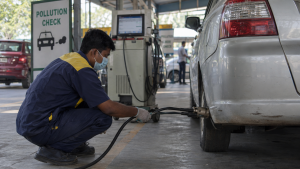
Vehicles contribute to urban and regional air pollution, making emission standards and in-use testing important parts of India’s environmental compliance framework. Bharat Stage norms regulate new vehicles, while Pollution Under Control certificates assess emissions from vehicles already on the road.
Bharat Stage Emission Standards
Bharat Stage (BS) standards regulate pollutants emitted by motor vehicles and are adapted from European emission norms. Their implementation in India began in 2000. India moved directly from BS-IV to BS-VI, skipping BS-V; BS-VI applied nationwide to all new vehicles from April 1, 2020.
- Fuel sulphur: BS-VI fuel is capped at 10 parts per million (ppm) sulphur, compared with 50 ppm under BS-IV. Lower sulphur levels support the effective operation of exhaust after-treatment systems.
- Diesel controls: BS-VI diesel vehicles use technologies such as Selective Catalytic Reduction (SCR), which uses AdBlue (a urea-water solution), to reduce nitrogen oxides (NOx). Diesel Particulate Filters (DPFs) reduce particulate matter (PM).
- Petrol controls and objectives: BS-VI petrol vehicles may use Gasoline Particulate Filters (GPFs). The standards seek to reduce PM, NOx, carbon monoxide (CO) and hydrocarbons (HC) from vehicle exhaust.
Pollution Under Control Certificate and Testing
The Pollution Under Control (PUC) system operates under the Central Motor Vehicles Rules, 1989, and requires vehicles in use to meet prescribed emission limits. Every motor vehicle other than an electric vehicle must have a valid PUC certificate. Testing centres are authorised and regulated by state transport departments.
- Petrol, CNG and LPG vehicles: Testing typically measures CO and HC in exhaust at engine idle speed.
- Diesel vehicles: A free-acceleration test measures smoke opacity, which indicates particulate emissions.
- Enforcement: A vehicle without a valid PUC certificate may attract penalties under the Motor Vehicles Act, 1988.
- Measurement scope: The standard PUC protocol checks specified exhaust indicators; it is not the same as the broader regulation of emissions from new vehicles through BS standards.
The two approaches serve different compliance functions. BS norms set limits and requirements for new vehicles, while PUC testing checks selected emissions from vehicles already operating on roads. Accurate measurement, dependable testing capacity and consistent enforcement are important to the effectiveness of in-use checks.
Major Vehicle Pollutants and Impacts
Vehicle exhaust contains pollutants with distinct effects on health and the environment. Their presence and quantities depend on factors including combustion and fuel characteristics.
- Particulate matter (PM2.5 and PM10): Fine solid or liquid particles suspended in air. PM2.5 can penetrate deep into the lungs and bloodstream and is associated with respiratory and cardiovascular illness, including asthma, bronchitis and heart attacks. Diesel vehicles are a major source of PM.
- Nitrogen oxides (NOx): Reactive gases including nitrogen dioxide (NO2). They contribute to respiratory problems, acid rain and the formation of ground-level ozone, a component of smog.
- Sulphur dioxide (SO2): A corrosive gas that affects the respiratory system and contributes to acid rain and particulate matter formation. Fuel sulphur content is an important source.
- Carbon monoxide (CO): A colourless, odourless poisonous gas produced by incomplete fuel combustion. It reduces the blood’s oxygen-carrying capacity; high exposure can be fatal.
- Unburnt hydrocarbons (HC): Compounds left incompletely combusted. Some are carcinogenic, and hydrocarbons contribute to ground-level ozone and secondary particulate matter.
- Lead (Pb): A neurotoxin historically emitted through leaded petrol. The phase-out of leaded petrol has significantly reduced its presence in vehicle emissions.
Regulatory Framework and Implementation
The Motor Vehicles Act, 1988, and rules framed under it provide the principal framework for vehicle emission control. Responsibilities are divided across transport and environment authorities.
- Central Government: Section 110 of the Motor Vehicles Act empowers it to make rules on vehicle construction, equipment and maintenance, including emission requirements.
- Central Motor Vehicles Rules: Rule 115 sets out emission standards for vehicle classes and PUC certificate requirements.
- MoRTH: The Ministry of Road Transport and Highways is the nodal ministry for motor-vehicle policy, including emission standards and testing.
- Environment authorities: The Ministry of Environment, Forest and Climate Change has responsibility for environmental policy, including ambient air quality standards. The Central Pollution Control Board and State Pollution Control Boards provide technical guidance and monitor air quality.
- State transport departments: They enforce emission norms and license and monitor PUC testing centres. Testing capacity and sound emissions measurement are practical requirements for effective compliance.
- Transport vehicle: Section 2(47) of the Act includes public service vehicles, goods carriages, educational institution buses and private service vehicles within this category.
Key Prelims Takeaways
- BS transition: India skipped BS-V and moved from BS-IV to BS-VI, effective for new vehicles nationwide from April 1, 2020.
- Fuel standard: BS-VI fuel has a maximum sulphur content of 10 ppm, against 50 ppm under BS-IV.
- PUC methods: Petrol, CNG and LPG vehicles are checked for CO and HC at idle; diesel vehicles undergo free-acceleration smoke-opacity testing.
- Diesel technology: SCR and DPF systems address NOx and particulate matter respectively.
- Key legislation: Section 110 empowers the Central Government to make rules on vehicle construction, equipment and maintenance; Rule 115 sets emission and PUC requirements.
- Transport vehicle: Section 2(47) includes public service vehicles, goods carriages, educational institution buses and private service vehicles.
Recent Context
MoRTH announced revised PUC validity periods on November 19, 2026, under the Central Motor Vehicles (Sixteenth Amendment) Rules, 2026. The Gazette notification is dated November 13; the rules took effect on publication on November 16.
| Vehicle category | PUC validity |
| BS-I, BS-II and BS-III | Three months |
| BS-IV | Six months |
| BS-VI non-transport: up to six years; over six to ten years; over ten years | Three years; one year; six months |
| BS-VI transport: up to six years; over six to ten years; over ten years | Two years; one year; six months |
Existing certificates retain their validity until first renewal under the new schedule. Renewal within 10 days before expiry runs from the existing expiry date; renewal after expiry runs from the renewal date.
| Related | |
|---|---|