Satellite Communication Bands and Their Uses
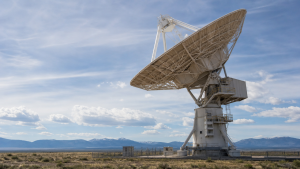
Satellite communication uses different radio frequency bands for navigation, broadcasting, telemetry, military links, and broadband services. Each band has distinct advantages in bandwidth, antenna size, and resistance to weather interference.
Introduction to Satellite Spectrum
Satellite communication relies on electromagnetic waves to transmit data between Earth and space. The International Telecommunication Union (ITU) manages this shared resource by dividing the radio spectrum into distinct frequency ranges called bands. These bands operate within the microwave spectrum, generally ranging from 1 GHz to over 70 GHz.
Each band has unique characteristics, including transmission capacity, antenna size requirements, and vulnerability to weather interference.
Satellite Frequency Bands at a Glance
| Band Name | Frequency Range (GHz) | Primary Applications | Susceptibility to Weather |
| L-Band | 1 to 2 | GPS, satellite phones, fleet tracking | Extremely low |
| S-Band | 2 to 4 | Weather radars, NavIC, satellite telemetry | Low |
| C-Band | 4 to 8 | Satellite TV distribution, enterprise VSAT | Moderate |
| X-Band | 8 to 12 | Military communications, space research, radars | Moderate |
| Ku-Band | 12 to 18 | Direct-to-Home (DTH) TV, broadband internet | High |
| Ka-Band | 26 to 40 | High-throughput broadband, spacecraft imaging | Very high |
| V-Band | 40 to 75 | Gateway links, inter-satellite communications | Extremely high |
L-Band (1–2 GHz)
- Lowest satellite frequency range: It operates at the lowest frequency range used for satellite networks.
- Weather resistance: It is highly resistant to rain fade and atmospheric absorption. Signals pass easily through heavy rain, dense clouds, and thick foliage.
- Bandwidth: The available bandwidth is narrow, which limits overall data transfer speed.
- Antenna size: Ground terminals can use very small, omnidirectional antennas, eliminating the need for precise tracking and pointing.
- Common uses: Global navigation satellite systems like GPS (United States), GLONASS (Russia), and Galileo (Europe) use this band.
- Mobile satellite services: Satellite phones operated by Inmarsat and Iridium rely on this band.
- Other uses: Search and rescue operations, maritime tracking, and aviation tracking use L-band frequencies.
S-Band (2–4 GHz)
- Signal propagation: This band offers a moderate frequency range and reliable signal propagation.
- Weather resistance: It has excellent resistance to rain and weather interference.
- Data rates: It supports slightly higher data transmission rates than the L-band.
- Antenna size: Ground installations require moderately sized antennas.
- TT&C services: Satellites use this band for Telemetry, Tracking, and Command (TT&C) services to monitor spacecraft health and orbital paths.
- Radar use: Weather radar systems and surface ship radars operate within this spectrum.
- NavIC: India’s regional navigation system, NavIC, utilizes the S-band for civilian positioning services.
- ISS communication: NASA uses S-band links for direct communication with the International Space Station (ISS).
C-Band (4–8 GHz)
- Telecommunication use: This band is a standard choice for established global telecommunication networks.
- Typical frequencies: It operates with a typical uplink of 6 GHz and a downlink of 4 GHz.
- Rain fade resistance: The band has high resistance to rain fade, making it highly reliable in tropical regions during monsoon seasons.
- Antenna size: It requires large ground terminal antennas, often measuring 1.8 meters to 3 meters in diameter.
- Broadcasting: Broadcasters use C-band for long-distance television program distribution and raw television feeds.
- VSAT networks: Enterprise Very Small Aperture Terminal (VSAT) networks use it for reliable connections in remote areas.
X-Band (8–12 GHz)
- Primary users: This band is primarily reserved for military and government services.
- Security: It offers highly secure communication channels with lower risk of civilian interference.
- Antenna size: It supports relatively small, portable antennas on military vehicles and naval vessels.
- Weather performance: It is moderately susceptible to rain fade but maintains reliable performance in most weather conditions.
- Uses: Military satellite communications (mil-satcom) and precision military radars utilize this band.
- Space missions: Scientific spacecraft and deep space exploration missions use X-band frequencies for telemetry and scientific data downlink.
Ku-Band (12–18 GHz)
- Name meaning: The name Ku stands for “K-under.”
- Bandwidth: It provides high bandwidth, which supports rapid data transmission and high-definition video.
- Antenna size: It allows the use of small, consumer-grade dish antennas, typically 60 to 90 centimeters in diameter.
- Rain fade: The band is susceptible to rain fade. Heavy rain can absorb the signal, causing brief outages.
- Primary use: Direct-to-Home (DTH) satellite television services are the primary user of this spectrum.
- VSAT use: Civilian VSAT systems use Ku-band to provide internet connectivity to schools, offices, and ATMs.
Ka-Band (26–40 GHz)
- Name meaning: The name Ka stands for “K-above.”
- Capacity: It offers massive bandwidth, enabling ultra-fast download and upload speeds.
- Antenna size: It uses extremely small and compact terminal antennas.
- Weather sensitivity: This band is highly vulnerable to rain fade and atmospheric attenuation. Water droplets in the air absorb and scatter these high-frequency signals.
- Mitigation: Operators use advanced power control and adaptive coding to counter signal loss.
- High-throughput satellites: High-Throughput Satellites (HTS) utilize Ka-band to provide commercial broadband services.
- LEO constellations: Low-Earth orbit (LEO) internet constellations, including SpaceX’s Starlink, use Ka-band for user terminals and gateways.
V-Band (40–75 GHz)
- High-capacity frontier: This band represents the frontier of high-capacity satellite communications.
- Atmospheric loss: It suffers from extreme atmospheric signal loss and gas absorption.
- Bandwidth: It provides massive, uncrowded bandwidth for ultra-high-speed data transport.
- Inter-satellite links: Satellites use the V-band for inter-satellite links (ISLs), allowing them to transmit data directly to each other in vacuum space, bypassing the atmosphere.
- Gateway links: Modern LEO constellations use V-band for high-capacity gateway links to ground stations.
Key Trade-offs in Satellite Bands
The Frequency and Bandwidth Trade-off
- Lower frequencies: L-band and S-band offer limited bandwidth but have excellent signal penetration.
- Higher frequencies: Ku-band and Ka-band provide massive bandwidth but suffer from severe signal degradation over long atmospheric paths.
Rain Fade Susceptibility
- Below 10 GHz: L, S, and C bands are highly resilient to weather.
- Above 10 GHz: Ku, Ka, and V bands experience rain fade because the signal wavelengths are close to the physical size of rain droplets.
Antenna Size and Portability
- Lower frequencies: Lower frequencies require larger dish antennas to capture the wider wavelengths.
- Higher frequencies: Higher frequencies allow small, portable, and flat-panel phased array antennas.
Spectrum Governance and Uplink-Downlink Dynamics
Role of the International Telecommunication Union
- ITU role: The ITU is the United Nations specialized agency that coordinates the global use of the radio spectrum.
- Administrative regions: It divides the world into three administrative regions to manage frequency allocations and prevent cross-border interference.
Uplink versus Downlink Frequencies
- Separate frequencies: Satellites use separate frequencies for sending data to space (uplink) and receiving data on Earth (downlink).
- Frequency pattern: The uplink frequency is always higher than the downlink frequency.
- Power factor: Higher frequencies require more power to transmit through the atmosphere, and power is easier to generate at ground stations than on a spacecraft.
Recent Context
On August 25, 2026, NASA astronaut Anil Menon and ESA astronaut Sophie Adenot completed U.S. Spacewalk 98 to replace a critical Space-to-Ground antenna on the ISS.
The newly installed Ku-band microwave antenna on the Z1 truss restored high-speed communications redundancy between the ISS and Mission Control in Houston.
Rare Facts for Prelims
- Microwave dominance: Most satellite communication bands fall within the microwave portion of the radio spectrum.
- Lower-band advantage: L-band signals can better penetrate foliage, which is why they are useful for aviation and maritime tracking.
- TT&C importance: Telemetry, Tracking, and Command links are essential for controlling spacecraft health and orbit from Earth.
- Flat-panel trend: Higher-frequency bands are encouraging the use of compact phased-array terminals instead of large dish antennas.
- ITU purpose: The ITU’s spectrum coordination helps reduce interference across national borders and satellite networks.
- Frequency planning: Separate uplink and downlink frequencies help avoid self-interference between Earth stations and satellites.
| Related | |
|---|---|