Important Protected Reptile Species in India
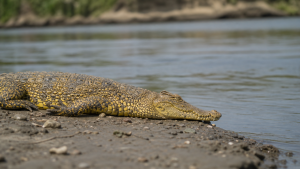
The Wildlife (Protection) Act, 1972 provides the main legal framework for reptile conservation in India. After the 2022 amendment, protected reptiles are covered under a streamlined schedule system, with several species receiving the highest level of protection.
Legal Framework for Reptile Protection in India
The legal basis for protecting wildlife in India is the Wildlife (Protection) Act, 1972. It was amended in 2022 to consolidate protection categories and align with international standards. The amendment reduced the original six schedules to four main schedules:
- Schedule I: Highest legal protection; hunting or harming species in this category attracts the severest penalties.
- Schedule II: Species with relatively lower protection; penalties are less severe than for Schedule I.
- Schedule III: Protected plant species.
- Schedule IV: Aligns with CITES appendices to regulate international trade.
Many ecologically important reptiles in India are protected under Schedule I.
Protected Crocodilian Species
India has three native crocodilian species, and all three are protected under Schedule I of the Wildlife (Protection) Act.
Gharial (Gavialis gangeticus)
- This is a highly specialized freshwater crocodile with a long, thin snout adapted for catching fish.
- It is classified as Critically Endangered on the IUCN Red List.
- Major populations exist in the Chambal River, Girwa River, and Son River.
- Primary threats include river pollution, illegal sand mining, habitat loss, and accidental entanglement in fishing nets.
Mugger Crocodile (Crocodylus palustris)
- Also known as the marsh crocodile, it inhabits freshwater lakes, ponds, rivers, and marshes.
- It is classified as Vulnerable on the IUCN Red List.
- It can tolerate saltwater to some extent but prefers sluggish freshwater bodies.
- Main threats include habitat destruction, human-crocodile conflict, and drowning in fishing nets.
Saltwater Crocodile (Crocodylus porosus)
- This is the largest living reptile in the world.
- It inhabits mangrove forests, estuaries, and coastal areas.
- The largest populations in India live in Bhitarkanika National Park in Odisha and the Sundarbans in West Bengal.
- It is classified as Least Concern globally but is strictly protected under Schedule I in India.
| Feature | Gharial (Gavialis gangeticus) | Mugger (Crocodylus palustris) | Saltwater Crocodile (Crocodylus porosus) |
|---|---|---|---|
| IUCN Status | Critically Endangered | Vulnerable | Least Concern |
| Snout | Very long and narrow | Broad and relatively short | Broad and powerful |
| Unique feature | Adult male develops “ghara” on snout | No ghara | Largest living reptile |
| Preferred habitat | Deep, flowing freshwater rivers | Rivers, lakes, reservoirs, ponds and marshes | Mangroves, estuaries, tidal rivers and coastal waters |
| Saltwater tolerance | Very low | Limited; mainly freshwater | Very high; capable of marine dispersal |
| Feeding niche | Highly specialised fish-eater | Generalist predator | Large apex predator |
| Movement on land | Poor; highly adapted to aquatic life | Relatively good | Capable of terrestrial movement |
| Nesting type | Hole-nester on sandy riverbanks | Hole-nester | Mound-nester |
| Key Indian stronghold | National Chambal Sanctuary | Widely distributed across India | Bhitarkanika; also Sundarbans and A&N Islands |
| Taxonomic clue | Genus Gavialis; family Gavialidae | Genus Crocodylus; family Crocodylidae | Genus Crocodylus; family Crocodylidae |
Protected Marine and Freshwater Turtles
India is home to several turtle species that play key roles in maintaining marine and river ecosystems.
Olive Ridley Turtle (Lepidochelys olivacea)
- This sea turtle is famous for its synchronized mass nesting behavior, known as Arribada, on India’s eastern coast.
- Gahirmatha Marine Sanctuary in Odisha is the largest nesting site for this species in the world.
- It is classified as Vulnerable on the IUCN Red List.
- It is protected under Schedule I of the Wildlife (Protection) Act.
Green Sea Turtle (Chelonia mydas)
- This large herbivorous sea turtle feeds primarily on seagrasses and algae.
- It is classified as Endangered on the IUCN Red List.
- It is listed under Schedule I of the Wildlife (Protection) Act.
Leatherback Turtle (Dermochelys coriacea)
- This is the largest of all living turtles in the world.
- It lacks a bony shell and has a leathery carapace.
- The primary nesting sites in India are in the Andaman and Nicobar Islands.
- It is classified as Vulnerable globally but holds Schedule I status in India.
Red-crowned Roofed Turtle (Batagur kachuga)
- This freshwater turtle species is native to India and Nepal.
- The National Chambal Sanctuary hosts the only remaining viable population of this species.
- It is classified as Critically Endangered on the IUCN Red List.
- It is listed under Schedule I of the Wildlife (Protection) Act.
Protected Tortoise Species
Unlike turtles, tortoises are primarily land-dwelling animals. India protects several native tortoise species.
Indian Star Tortoise (Geochelone elegans)
- This species features a highly patterned, star-like carapace that helps it camouflage in dry scrub forests.
- It is native to dry and scrub areas of Central, Northwestern, and Southern India.
- The species faces heavy poaching for the illegal international pet market.
- It was upgraded to Schedule I under the Wildlife (Protection) Act to curb this illegal trade.
- It is classified as Vulnerable on the IUCN Red List.
Indian Star Tortoise is now in Schedule I and Appendix I of CITES; it was upgraded to Appendix I in 2019.
Protected Lizard Species
Monitor lizards are key predators and scavengers in their ecosystems. India is home to several protected lizard species.
Bengal Monitor Lizard (Varanus bengalensis)
- This large lizard lives across forests, farmlands, and rocky outcroppings.
- It is classified as Near Threatened on the IUCN Red List.
- It is protected under Schedule I of the Wildlife (Protection) Act.
- The species is poached for its meat, skin, and fat.
Yellow Monitor Lizard (Varanus flavescens)
- This species is found in wet areas, marshes, and river valleys of Northern India.
- It is classified as Endangered on the IUCN Red List.
- It is listed under Schedule I of the Wildlife (Protection) Act.
Water Monitor Lizard (Varanus salvator)
- This is the second-largest monitor lizard in the world and is often found in coastal and mangrove habitats.
- It is classified as Least Concern on the IUCN Red List but is protected under Schedule I in India.
Indian Spiny-tailed Lizard (Saara hardwickii)
- This herbivorous lizard inhabits the arid and semi-arid regions of northwestern India.
- It lives in underground burrows and is known for its tail covered in whorls of spiny scales.
- It is heavily poached for its oil, which is extracted from the fat in its tail.
- To counter this threat, it was moved up to Schedule I of the Wildlife (Protection) Act in the 2022 amendment.
Protected Snake Species
Snakes help control rodent and pest populations. India gives high legal protection to several venomous and non-venomous snake species.
Indian Rock Python (Python molurus)
- This is a massive, non-venomous constrictor snake found in forests and grasslands.
- It is classified as Near Threatened on the IUCN Red List.
- It is listed under Schedule I of the Wildlife (Protection) Act.
- It faces threats from habitat loss and human-wildlife conflict.
King Cobra (Ophiophagus hannah)
- This is the longest venomous snake in the world and the National Reptile of India.
- It is the only snake species that actively builds and guards nests for its eggs.
- It preys primarily on other snakes.
- It is classified as Vulnerable on the IUCN Red List.
- It is protected under Schedule II of the Wildlife (Protection) Act.
Indian Rat Snake (Ptyas mucosa)
- Regionally called Dhaman, this is a fast-moving, non-venomous snake that acts as a natural pest control agent in agricultural fields.
- It is classified as Least Concern on the IUCN Red List.
- Under the 2022 amendment, it is listed under Schedule I of the Wildlife (Protection) Act.
- It faces exploitation for its skin and meat in international trade.
Spectacled Cobra (Naja naja)
- This venomous snake is a member of the Big Four species responsible for most snakebites in India.
- It is highly protected under Schedule I of the Wildlife (Protection) Act as amended in 2022.
- It is classified as Least Concern on the IUCN Red List.
Russell’s Viper (Daboia russelii)
- This is another member of the Big Four venomous snakes in India.
- It is protected under Schedule I of the Wildlife (Protection) Act as amended in 2022.
- It is classified as Least Concern on the IUCN Red List.
Reptile Protection and Conservation Status Matrix
| Common Name | Scientific Name | IUCN Red List Status | Wildlife Protection Act Schedule (Amended 2022) |
| Gharial | Gavialis gangeticus | Critically Endangered | Schedule I |
| Mugger Crocodile | Crocodylus palustris | Vulnerable | Schedule I |
| Saltwater Crocodile | Crocodylus porosus | Least Concern | Schedule I |
| Olive Ridley Turtle | Lepidochelys olivacea | Vulnerable | Schedule I |
| Green Sea Turtle | Chelonia mydas | Endangered | Schedule I |
| Leatherback Turtle | Dermochelys coriacea | Vulnerable | Schedule I |
| Red-crowned Roofed Turtle | Batagur kachuga | Critically Endangered | Schedule I |
| Indian Star Tortoise | Geochelone elegans | Vulnerable | Schedule I |
| Bengal Monitor Lizard | Varanus bengalensis | Near Threatened | Schedule I |
| Yellow Monitor Lizard | Varanus flavescens | Endangered | Schedule I |
| Indian Spiny-tailed Lizard | Saara hardwickii | Vulnerable | Schedule I |
| Indian Rock Python | Python molurus | Near Threatened | Schedule I |
| King Cobra | Ophiophagus hannah | Vulnerable | Schedule II |
| Indian Rat Snake | Ptyas mucosa | Least Concern | Schedule I |
| Spectacled Cobra | Naja naja | Least Concern | Schedule I |
| Russell’s Viper | Daboia russelii | Least Concern | Schedule I |
Recent Context
On August 23, 2026, 216 rescued Indian Star Tortoises were released at Tadoba-Andhari Tiger Reserve, Maharashtra, under Project STRIPES. The species is now under Schedule I, Appendix I of CITES, and remains Vulnerable on the IUCN Red List.
Rare Facts for Prelims
- Gharial males develop a bulb-like nasal growth called a ghara, which is used in vocalization and courtship.
- Olive Ridley turtles often nest in large synchronized groups, making Indian beaches crucial for global conservation.
- Leatherback turtles are the only living turtles with a leathery shell instead of a hard bony carapace.
- Indian Star Tortoises are heavily trafficked because their striking shell pattern makes them popular in the exotic pet trade.
- King cobras are unusual among snakes because they construct nests and guard their eggs until hatching.
- Indian Spiny-tailed Lizards are among the reptile species most affected by oil extraction from tail fat in illegal wildlife trade.
| Related | |
|---|---|