Punjab Records 2,787 Stubble-Burning Cases
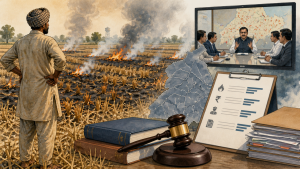
Punjab recorded 2,787 farm-fire incidents between September 15 and November 5, 2026, official data showed on November 6. The tally was 2,347 on November 4. Tarn Taran reported the most cases at 586, followed by Ferozepur with 361. Sangrur recorded 240, Amritsar 221, Bathinda 216 and Patiala 156.
Fines, FIRs and enforcement
Authorities imposed ₹46.10 lakh in environmental compensation in 914 cases and recovered ₹24.85 lakh. They registered 710 First Information Reports (FIRs), including 294 in Tarn Taran under Section 223 of the Bharatiya Nyaya Sanhita, 2023, concerning disobedience of an order promulgated by a public servant. Revenue records received “red entries” in 829 cases.
On November 4, Commission for Air Quality Management (CAQM) chairperson Rajesh Verma led a video meeting with senior bureaucrats and police officers from 12 Punjab districts. CAQM directed authorities to intensify monitoring and enforcement and hold nodal officers accountable for failures to monitor or prevent fires.
Important Facts for Exams
- Harvesting interval: In northern India, farmers burn wheat and paddy residue as a low-cost disposal method to shorten the interval between harvesting and sowing successive crops.
- Mechanical residue management: The Happy Seeder offers a mechanical alternative: it chops crop residues into small pieces and spreads them evenly over the field.
- Enzyme bio-decomposer: An enzyme-based bio-decomposer can be sprayed after harvest to raise soil organic carbon and help maintain soil health.
- Soil impacts: Prolonged stubble burning kills beneficial soil microflora and fauna, reducing organic matter and disrupting the soil’s carbon–nitrogen balance.
| Related | |
|---|---|