Major Ancient and Medieval Ports of India
India’s ports linked inland markets with maritime routes across the Arabian Sea and Bay of Bengal. From Harappan dock facilities to medieval trading cities, they carried goods and people while supporting coastal economies and cultural exchange with West Asia, Africa, Southeast Asia and China.
Harappan and Early Historical Ports
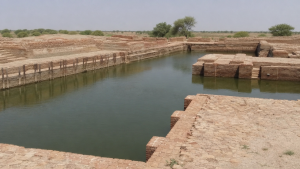
Harappan settlements show early engagement with maritime commerce. Lothal, in present-day Gujarat, is often identified as a Harappan dockyard; its planned basin and warehouse point to organized trade and storage.
- Lothal: Beads, copper and semi-precious stones were among the goods associated with its trade. Evidence connects Harappan commerce with regions including Mesopotamia.
- Dholavira: Located on Khadir island in Gujarat, it was an important Harappan urban centre. Its location and water-management system are notable, though it was not exclusively a port.
- Sopara: On the Konkan coast, Sopara was an important port during the Mauryan and Satavahana periods, with links to West Asian trade.
Early Historic Ports and Overseas Trade
From the early historic period, ports on both coasts connected Indian goods to long-distance trading networks. Textual references and archaeological finds help establish the importance of several centres.
- Bharuch (Barygaza): Situated near the mouth of the Narmada, Bharuch was a major western port. Greek accounts called it Barygaza, and the Periplus of the Erythraean Sea describes its commercial importance. Exports included spices, textiles and precious stones; imports included wine, copper and lead.
- Muziris: This Malabar Coast port was associated with trade with the Roman world, especially in black pepper. Its precise location remains debated; Pattanam is among the sites associated with it.
- Arikamedu: Near present-day Puducherry, it was an Indo-Roman trading centre on the Coromandel Coast. Excavations have yielded Roman pottery, including Arretine ware, coins and glassware.
- Tamralipti: At the mouth of the Ganges, this eastern port served routes to Sri Lanka and Southeast Asia. It was also an embarkation point for Buddhist pilgrims travelling abroad.
Gupta and Post-Gupta Ports
Maritime exchange continued through the Gupta and post-Gupta periods. Western ports served routes across the Arabian Sea, while eastern ports connected the subcontinent with Sri Lanka, China and Southeast Asia.
- Tamralipti: It remained a prominent eastern port. The Chinese Buddhist pilgrim Fa Hien sailed from there to Sri Lanka in the fifth century CE.
- Bharuch: It continued to facilitate western maritime trade with the Persian Gulf, Red Sea and East Africa.
- Kalyana: This western-coast port in present-day Maharashtra was another centre of regional and overseas commerce.
- Cambay (Khambat): It grew in importance in the later medieval period and became known for textile trade.
Medieval Ports and Regional Powers
Regional kingdoms, including the Cholas and Pallavas, promoted maritime commerce and maintained naval power. Ports supported trade as well as diplomatic, religious and cultural contact across the Bay of Bengal.
- Kaveripattinam (Puhar): At the mouth of the Kaveri, it was an early Chola capital and port. Its commercial life is reflected in Tamil literature, including the Silappadikaram.
- Mamallapuram: This Pallava port and trade centre was also associated with a naval presence and connections with Southeast Asia. Its rock-cut temples and monolithic monuments are prominent landmarks.
- Nagapattinam: An important Chola port on the Coromandel Coast, it linked South India with Southeast Asia, including Srivijaya. It was also a site of Buddhist institutions and interaction with Chinese traders.
- Quilon (Kollam): On the Malabar Coast, Quilon traded in spices and pearls with China and Arabia and remained important under the Chera and Venad kingdoms.
- Calicut (Kozhikode): The Zamorins’ port became a major centre for spices, textiles and timber. Vasco da Gama’s arrival in 1498 marked the beginning of direct European maritime trade with India.
- Dabhol, Goa and Surat: Dabhol was important under the Bahmani and Adil Shahi kingdoms, with Red Sea and Persian Gulf links. Goa had trade connections before Portuguese rule. Surat later became a major Mughal-era port for commerce with the Middle East and Europe, particularly in textiles.
Trade Routes and Historical Significance
Port activity connected coastal settlements to inland production centres and helped shape regional economies. The monsoon winds influenced sailing seasons and routes across the Arabian Sea and Bay of Bengal.
- Western routes: Ports traded with the Roman world, Persia, Arabia and East Africa. Exports included pepper and other spices, cotton and silk textiles, precious stones, timber and medicinal plants.
- Western imports: Gold, silver, horses, wine, lead, copper and glass were among the goods brought to Indian ports.
- Eastern routes: Ports connected India with Sri Lanka, Southeast Asia and China. Textiles, rice, spices, pearls and iron were exported; silk, camphor and other goods arrived from overseas.
- Cultural exchange: Maritime networks carried religious ideas and artistic practices. Buddhist and Hindu influences spread from India to Southeast Asia, alongside the movement of merchants and pilgrims.
Key Prelims Takeaways
- Lothal: Harappan site in Gujarat, often identified as a dockyard.
- Barygaza: Greek name for Bharuch; associated with the Periplus of the Erythraean Sea.
- Muziris and Arikamedu: Malabar and Coromandel Coast centres associated with Roman trade.
- Tamralipti: Eastern port linked with Fa Hien’s voyage to Sri Lanka.
- Puhar and Nagapattinam: Important Chola ports with literary and Southeast Asian connections.
- Calicut: Zamorin port where Vasco da Gama arrived in 1498.
Recent Context
On October 30, 2026, the Tamil Nadu State Department of Archaeology unearthed 12th-century bronze-alloy idols of Nataraja and Sivakami at Nagapattinam, its first such find during excavations. The discovery adds evidence of Chola-period religious practice and metal sculpture. Chola bronzes flourished from the ninth to thirteenth centuries and were typically made using cire-perdue, or lost-wax, casting.
| Related | |
|---|---|