Important Indigenous Communities of the Andaman and Nicobar Islands
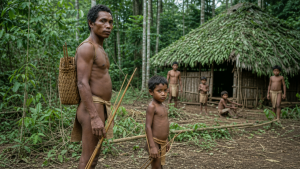
The Andaman and Nicobar Islands are home to indigenous communities with distinct cultures and varying degrees of contact with the outside world. Their protection involves safeguarding territory, customary ways of life and access to forest resources, alongside constitutional and statutory protections for Scheduled Tribes.
Geographical and Tribal Overview
The Andaman and Nicobar Islands are a Union Territory situated at the juncture of the Bay of Bengal and the Andaman Sea. The archipelago comprises the Andaman Islands in the north and the Nicobar Islands in the south. Its indigenous communities are broadly classified as Andamanese, associated with the Negrito ethnological grouping, and Nicobarese and Shompen, associated with the Mongoloid grouping. There are six notified Scheduled Tribes in the Union Territory. Five are designated Particularly Vulnerable Tribal Groups (PVTGs): the Great Andamanese, Jarawa, Onge, Sentinelese and Shompen. The Nicobarese are a Scheduled Tribe but are not classified as a PVTG.
Andamanese Communities
The Andamanese communities have traditionally relied on hunting and gathering. Their populations, locations and levels of contact with outsiders differ, but protection from disease, cultural disruption and unauthorised entry into their territories is a shared concern.
- Great Andamanese: Once comprising ten distinct tribes, the community now numbers around 50 people. Its members primarily live on Strait Island, after relocation from ancestral territories. They speak Jeru, a Kora-Bo language described as a blend of ancestral tongues. The Great Andamanese are a PVTG.
- Jarawa: The Jarawa inhabit parts of South and Middle Andaman and are semi-nomadic hunter-gatherers. Their population is estimated at around 400. They maintain a largely isolated way of life within the Jarawa Tribal Reserve. Contact with outsiders is restricted and regulated because of risks to their health and culture. The Jarawa are a PVTG.
- Onge: The Onge primarily inhabit Little Andaman Island and Rutland Island. Their population is approximately 100. They are semi-nomadic hunter-gatherers who depend on forest and marine resources. The Onge are a PVTG.
- Sentinelese: The Sentinelese inhabit North Sentinel Island and resist contact with outsiders. Their population is unknown, with estimates ranging from 50 to 150. External contact poses serious risks to their community and culture. The Sentinelese are a PVTG.
Nicobarese and Shompen
The Nicobarese are the largest indigenous community in the Union Territory, with a population of over 27,000. They primarily inhabit the Nicobar Islands, including Great Nicobar, Car Nicobar and Nancowry. Compared with the Andamanese communities, they have greater interaction with wider society and participate in trade and administrative roles.
- Livelihoods: Nicobarese livelihoods include horticulture, cultivation of coconut and areca nut, and pig rearing.
- PVTG status: The Nicobarese are not classified as a PVTG. The Shompen are among the five PVTGs in the Union Territory.
The distinction between Scheduled Tribe status and PVTG classification is important: PVTGs are a subset of Scheduled Tribes, not a separate constitutional category. The six notified Scheduled Tribes include the Nicobarese, while the five PVTGs comprise the four Andamanese communities described above and the Shompen.
Constitutional and Legal Safeguards
Article 366(25) defines Scheduled Tribes by reference to the communities deemed to be Scheduled Tribes under Article 342 for the purposes of the Constitution. These provisions provide the constitutional basis for identifying Scheduled Tribes; specific protections for island communities also arise under laws and regulations. The Andaman and Nicobar Islands (Protection of Aboriginal Tribes) Regulation, 1956, is a key territorial safeguard. It protects tribal reserves by prohibiting entry into them and regulating activities that may harm indigenous communities. Such protections are relevant to tribal welfare and cultural preservation, particularly where outside contact could affect health, customary practices or territorial security. The Scheduled Tribes and Other Traditional Forest Dwellers (Recognition of Forest Rights) Act, 2006, commonly called the Forest Rights Act (FRA), recognises and vests forest rights and occupation in eligible forest-dwelling Scheduled Tribes and Other Traditional Forest Dwellers. The Act seeks to address historical injustice affecting forest-dwelling communities.
- Gram Sabha: The Gram Sabha is the first authority in the FRA process. It initiates consideration of claims and recommends which rights should be recognised.
- Scrutiny and appeals: Recommendations proceed to sub-divisional and district-level committees for screening and approval. Screening committees comprise three officials from the Forest, Revenue and Tribal Welfare departments and three elected local-body members; they also hear appeals.
- Forest Dwelling Scheduled Tribe eligibility: A claimant must belong to a Scheduled Tribe in the area claimed, have resided there before December 13, 2005, and depend on forests for livelihood.
- Other Traditional Forest Dwellers: They must meet the residence test by demonstrating residence on forest land for three generations, or 75 years, before December 13, 2005.
Effective safeguards depend on both lawful procedures and meaningful participation by affected communities. The FRA’s role for Gram Sabhas and the protections under the 1956 Regulation are therefore significant to debates about tribal welfare, cultural preservation and constitutional safeguards.
Key Prelims Takeaways
- Six notified Scheduled Tribes: Five are PVTGs; the Nicobarese are not a PVTG.
- Andamanese: Great Andamanese, Jarawa, Onge and Sentinelese are the four Andamanese PVTGs.
- Shompen: The fifth PVTG in the Union Territory.
- Locations: Great Andamanese primarily live on Strait Island; Jarawa inhabit South and Middle Andaman; Onge inhabit Little Andaman and Rutland; Sentinelese inhabit North Sentinel Island.
- Territorial protection: The 1956 Regulation protects tribal reserves and regulates entry and potentially harmful activities.
- FRA process: The Gram Sabha recommends recognition of rights, followed by screening and approval at sub-divisional and district levels.
- FRA residence cut-off: December 13, 2005; the OTFD residence test is 75 years, or three generations.
Recent Context
On October 30, 2026, the Union Ministry of Tribal Affairs opposed four Nicobarese applicants’ intervention in a Great Nicobar forest-rights PIL, citing delay and bypassed FRA remedies; the applicants allege inadequate Gram Sabha consideration. The Supreme Court declined to halt proceedings on October 5, affirming cultural preservation as a fundamental right. The dispute concerns a 166-sq-km project.
| Related | |
|---|---|