Critical and Strategic Minerals in India and the World
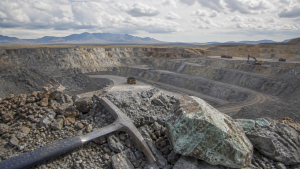
Critical minerals support modern industry, clean-energy technologies, advanced electronics and defence. Their economic importance, concentrated supply chains and exposure to disruption make mineral security a concern for countries seeking reliable access while pursuing sustainable mining and the energy transition.
Meaning and Classification
Critical minerals are raw materials that are economically important and face a significant risk of supply disruption. Risk may arise from limited availability or from supply chains concentrated in a small number of countries. Mineral lists and classification criteria vary between countries because industrial needs, geological resources and strategic priorities differ. They may also change as technologies and geopolitical conditions evolve. Strategic minerals are often a subset of critical minerals. They are considered essential to national security and defence, making secure and uninterrupted access important for military capability and strategic autonomy. The terms are related but not interchangeable: a mineral may be critical for economic or technological reasons without being classified as strategic.
India’s Policy and Institutions
India’s mineral sector is governed by the Mines and Minerals (Development and Regulation) Act, 1957. Policy changes have sought to improve access to minerals needed for industrial growth, energy security and emerging technologies.
- MMDR Amendment Act, 2023: Empowered the Central Government to auction mining leases and composite licences for critical minerals, changing the framework for their allocation.
- De-reservation: The amendment de-reserved six atomic minerals—lithium, beryllium, niobium, titanium, tantalum and zirconium—permitting their commercial exploitation by the private sector.
- India’s notified list: In December 2023, the Ministry of Mines notified 30 critical minerals: antimony, beryllium, bismuth, cobalt, copper, gallium, germanium, graphite, hafnium, indium, lithium, molybdenum, niobium, nickel, platinum group elements (PGE), phosphorous, potash, rare earth elements, rhenium, silicon, strontium, tantalum, tellurium, tin, titanium, tungsten, vanadium, zirconium, cadmium and selenium.
- Geological Survey of India (GSI): Plays a key role in mineral exploration and identification of reserves, including deposits of critical minerals.
- Khanij Bidesh India Limited (KABIL): A joint venture of National Aluminium Company Ltd., Hindustan Copper Ltd. and Mineral Exploration Corporation Ltd. It identifies, acquires, develops and processes strategic mineral assets overseas to support India’s domestic supply-chain needs.
The policy framework links domestic exploration and mining with efforts to secure overseas assets. Mineral security depends not only on identifying deposits, but also on developing reliable supply chains. The scale and pace of extraction must also be considered alongside sustainable mining and the needs of the clean-energy transition.
Global Supply Chains and Geopolitics
Production and processing of several critical minerals are geographically concentrated, creating potential vulnerabilities when supplies are disrupted. This concentration also shapes competition and international cooperation over access to resources and processing capacity.
- China: Dominates the processing and supply of many critical minerals, particularly rare earth elements (REEs).
- Democratic Republic of Congo: A major source of cobalt.
- South American lithium triangle: Argentina, Bolivia and Chile hold significant lithium reserves.
- Australia: A prominent producer of lithium and rare earths.
- Supply diversification: Countries and regional blocs seek more diverse sources and resilient supply chains to reduce exposure to concentrated supply.
International agreements and partnerships are increasingly used to support stable access and reduce dependencies. The EU Critical Raw Materials Act entered into force on 23 May 2024. It identifies 34 critical raw materials, including 17 designated as strategic, and establishes a framework aimed at secure and sustainable access. The EU classification, like national lists elsewhere, reflects specific regional priorities.
Uses and Strategic Importance
Critical minerals are inputs for a range of technologies and industries. Demand is connected to electrification, renewable-energy infrastructure, electronics, defence and industrial production.
- Renewable energy and transport: Lithium, cobalt, nickel and graphite are used in batteries for electric vehicles (EVs) and energy-storage systems. REEs are important for permanent magnets used in wind turbines and EV motors.
- Electronics: Gallium, indium and germanium are used in semiconductors, LED lighting and display technologies. Tantalum is used in capacitors found in smartphones and computers.
- Defence and aerospace: Titanium, REEs and platinum group metals are used in high-strength alloys, specialised electronics and advanced defence systems.
- Medical technology: Some critical minerals are used in medical imaging, diagnostics and surgical tools.
- Chemicals and industry: Phosphorous and potash are important inputs for fertilisers; other minerals are used in catalysts and specialised alloys.
Their importance creates a policy challenge: countries need dependable supplies for economic activity, defence and clean-energy technologies, while also pursuing sustainable mining. Supply security therefore involves more than access to ore; it also depends on the resilience of supply chains and the ability to meet changing technological needs.
Key Prelims Takeaways
- MMDR Act, 1957: India’s principal legislation governing the mining sector.
- 2023 amendment: Enabled Central Government auctions of critical mineral blocks and de-reserved six atomic minerals for private-sector exploitation.
- India’s list: The Ministry of Mines notified 30 critical minerals in December 2023.
- KABIL: Three-PSU joint venture mandated to develop strategic mineral assets overseas.
- GSI: Key institution for exploration and identification of mineral reserves in India.
- EU framework: The Critical Raw Materials Act identifies 34 critical raw materials, of which 17 are strategic.
Recent Context
At the EU–Canada Summit in Montreal on 29–30 October 2026, the two sides launched the Alliance for the Future, focusing on critical minerals, resilient supply chains and defence. The alliance is open to like-minded countries; EU imports of Canadian critical raw materials rose 62% in 2025 to €3.3 billion.
| Related | |
|---|---|