Devaswom Boards and Temple Administration in India
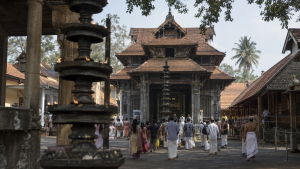
Devaswom Boards are statutory bodies that administer Hindu temples and associated property, particularly in Kerala. Their responsibilities combine religious duties with financial and administrative management, raising questions about the balance between religious autonomy, State regulation and the protection of cultural heritage.
Constitutional Foundations
Articles 25 and 26 of the Constitution protect religious freedom and the management of religious affairs, while allowing regulation of secular aspects of religious institutions.
- Article 25: Guarantees every person freedom of conscience and the right to profess, practise and propagate religion, subject to public order, morality and health. It permits State regulation of economic, financial, political and other secular activities associated with religious practice.
- Social reform: Article 25 also allows laws for social welfare and reform, including opening Hindu religious institutions of a public character to all classes and sections of Hindus.
- Article 26: Subject to public order, morality and health, religious denominations may establish and maintain religious and charitable institutions, manage religious affairs, own property and administer it in accordance with law.
- Religious and secular functions: Courts distinguish religious practices from secular activities such as property and financial administration. The latter may be regulated by the State, while constitutional protections remain relevant to religious affairs.
Devaswom Boards in Kerala
Kerala has several boards, with responsibilities shaped by the region’s historical administration and by separate statutes. They administer defined groups of temples rather than a single statewide network.
- Travancore Devaswom Board (TDB): Constituted under the Travancore-Cochin Hindu Religious Institutions Act, 1950, it manages more than 1,200 temples, including Sabarimala Sree Dharma Sastha Temple. Its three members are selected through the processes specified in the Act, involving Hindu Ministers, Hindu members of the Legislative Assembly and appointment by the President on the Kerala Cabinet’s advice. The government appoints the Board’s President from among its members.
- Cochin Devaswom Board (CDB): Also constituted under the 1950 Act, it administers approximately 400 temples in the area of the former Cochin princely state.
- Malabar Devaswom Board (MDB): It oversees more than 1,300 temples in the Malabar region under the Madras Hindu Religious and Charitable Endowments Act, 1951. Its powers have been limited, with trustees handling many temple affairs.
- Guruvayur Devaswom Board: Established under the Guruvayur Devaswom Act, 1978, it administers the Guruvayur Sree Krishna Temple and its subsidiary temples.
- Koodalmanikyam Devaswom Board: Constituted under the Koodalmanikyam Devaswom Act, 2005, it manages the Koodalmanikyam Temple at Irinjalakuda.
Functions and Administration
The boards’ work covers both the daily operation of temples and the long-term management of their resources. Specific arrangements, including the role of trustees and temple personnel, depend on the applicable law and established practices.
- Finances: Boards manage offerings, endowments and income from temple property, and oversee budgets, expenditure and investments for maintenance, rituals and salaries.
- Property and heritage: Their responsibilities may include movable and immovable assets such as land, buildings and ornaments. Proper stewardship supports the continuity of temple institutions and their cultural heritage.
- Personnel: Boards regulate and appoint temple employees, administrators and other staff. Roles connected with worship include tantris and melshanthis.
- Rituals and festivals: They must facilitate daily worship, annual festivals and special ceremonies in accordance with relevant customs and legal requirements.
- Public and charitable services: Some boards also support educational institutions, hospitals and orphanages using temple resources.
State Models and Accountability
Temple administration varies across India. Some states rely on departments or commissioners, while Kerala’s system includes multiple statutory boards. The degree of government involvement differs by state and institution.
- Tamil Nadu: The Hindu Religious and Charitable Endowments (HR&CE) Department administers thousands of temples and exercises significant control over their finances, property and administration.
- Karnataka: The State’s Muzrai Department administers many temples; funds generated by temples may also support development within the temple ecosystem.
- Andhra Pradesh and Telangana: Endowments departments or commissioners oversee Hindu religious institutions.
- Oversight: In Kerala, government involvement includes member-nomination processes and audit mechanisms. Such oversight is intended to promote accountability, but the extent of State control remains an important question for religious institutions.
Judicial Review and Key Issues
Courts review administrative decisions where they involve devotees’ rights, financial accountability, customary practices or the boundary between religious affairs and State regulation.
- Sabarimala: The dispute over the entry of women of menstruating age involved the TDB and raised questions about religious freedom, gender equality and the scope of judicial review.
- Ritual administration: The Kerala High Court has raised concerns about rituals and pooja timings at Vaikom Mahadeva Temple, directing the TDB to ensure supervision and submit a report.
- Devotee treatment: The Kerala High Court has directed Guruvayur temple employees to treat devotees with respect and maintain civility while managing crowds.
- Governance concerns: Allegations of financial irregularities may lead to investigations or legal proceedings. Political appointments and possible interference also raise concerns about board autonomy and public accountability.
- Wider balance: Judicial review can protect devotees and ensure lawful administration, while disputes over rituals and control require attention to constitutional freedoms and the statutory framework.
Key Prelims Takeaways
- Constitution: Articles 25 and 26 protect religious freedom and the management of religious affairs, subject to stated limits.
- Travancore and Cochin: Both boards were constituted under the Travancore-Cochin Hindu Religious Institutions Act, 1950.
- Malabar: The MDB is governed by the Madras Hindu Religious and Charitable Endowments Act, 1951.
- Separate statutes: Guruvayur and Koodalmanikyam boards operate under their respective 1978 and 2005 Acts.
- Core duties: Boards administer temple finances, property, personnel, rituals and related services.
- Other models: Tamil Nadu has the HR&CE Department, while Karnataka has the Muzrai Department.
Recent Context
K. Jayakumar took charge as TDB president on November 15, 2025. The Board plans to seek Kerala High Court approval to raise Sabarimala’s daily virtual-queue limit by 5,000, while possible booking irregularities are under investigation. The Kerala Assembly passed the 2026 amendment bill to grant the MDB institutional autonomy.
| Related | |
|---|---|