Models of Port Governance and Public-Private Partnerships in India
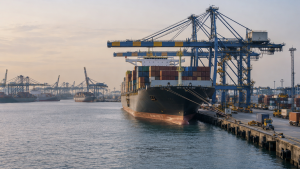
India’s port governance has shifted from direct public operation towards greater autonomy for port authorities and private participation in terminal development. The service-port and landlord-port models differ mainly in who operates facilities and provides services, while PPPs structure private investment and operations.
Major Ports and Their Governance
India has 12 Major Ports under the jurisdiction of the Union government. Their administration is governed by the Major Port Authorities Act, 2021, which replaced the Major Port Trusts Act, 1963. The 2021 Act provides for the regulation, operation and planning of Major Ports and places their administration, control and management with Boards of Major Port Authorities. The Act gives Port Boards greater autonomy in managing port assets and services. It also changes the institutional basis for decisions on port tariffs: these are determined by the Port Authority Boards, rather than by the former Tariff Authority for Major Ports (TAMP).
- Port Boards: Each Major Port is managed by a Board of Major Port Authority.
- Core responsibilities: Boards oversee asset management, port planning and the regulation of port services.
- Reform significance: Greater autonomy allows port authorities to make key administrative and tariff decisions within the statutory framework.
- Governance issue: Institutional reform must support effective planning and management while clarifying the respective roles of public authorities and private operators.
Service Port Model
Under the traditional service-port model, the port authority owns the assets, infrastructure and superstructure, and directly undertakes port operations. It provides services such as cargo handling, pilotage and warehousing. The authority thus combines the roles of infrastructure owner, service provider and operator.
- Ownership and operations: The port authority controls the facilities and performs the operational functions.
- Labour and equipment: Direct employment of labour and public ownership of operating equipment are characteristic features.
- Financing: Infrastructure development is generally funded through government budgets or port revenues.
- Constraint: Reliance on public financing and direct operation can limit private investment and the introduction of modern operational practices.
Most Indian Major Ports followed this integrated model before reforms. Its defining feature is that responsibility for building, owning and operating the port rests largely with the same public authority. This contrasts with arrangements that separate ownership of core infrastructure from the delivery of terminal services.
Landlord Port Model
In the landlord-port model, the port authority focuses on land, core infrastructure and oversight, while private operators undertake specified terminal activities. The authority retains ownership of port land and develops or maintains basic infrastructure, including berths, channels and breakwaters. Cargo handling, stevedoring and warehousing can be leased to private terminal operators.
- Public role: The port authority retains land and core infrastructure and performs a landlord and regulatory role.
- Private role: Private companies invest in and operate terminal superstructure and equipment under agreed arrangements.
- Revenue: The authority can earn revenue through concession fees and rents.
- Potential benefit: Separating infrastructure ownership from terminal operations can encourage private investment and operational efficiency.
Kamarajar Port Limited is India’s only corporatised Major Port and is registered as a company, an institutional form unusual among the country’s Major Ports. It follows the landlord-port model: operational and maintenance services are outsourced, and private-sector participation is used in developing new terminals. This structure makes the division between public infrastructure responsibility and private terminal activity clear.
PPPs and Their Regulatory Framework
A Public-Private Partnership (PPP) is a contractual arrangement between a public entity, such as a port authority, and a private firm for providing infrastructure or services. In ports, PPPs combine public-sector planning with private-sector capital and operational participation. They are used to develop facilities and bring in technology and management practices.
- DBFOT: Under the Design, Build, Finance, Operate and Transfer model, a private concessionaire designs, builds and finances a facility, operates it for a specified period, and then transfers it to the public authority.
- Other models: Build, Operate, Transfer (BOT) and Build, Own, Operate, Transfer (BOOT) are also used.
- Concession arrangement: The agreement establishes the private operator’s role and the period and terms under which it operates the facility.
- Public framework: The Major Port Authorities Act, 2021, provides a legal framework for Major Ports to enter into PPP agreements.
- Policy oversight: The Ministry of Ports, Shipping and Waterways oversees the policy and regulatory framework for PPPs at Major Ports.
- Project appraisal: The Public-Private Partnership Appraisal Committee (PPPAC) has a role in approving large PPP projects.
- Standard contracts: Model Concession Agreements (MCAs) set standard terms and help reduce transaction costs and risks.
- Allocation of obligations: MCAs define responsibilities, revenue sharing, risk allocation and performance standards for concessionaires.
For infrastructure financing, a PPP places the investment obligation specified in the concession arrangement on the private participant, while the public authority retains its defined responsibilities. The allocation of risk and revenue therefore matters alongside the construction and operating obligations. Standardised agreements can make these obligations clearer; effective appraisal and oversight remain important to the arrangement.
Key Prelims Takeaways
- Major Ports: India has 12 Major Ports governed under the Major Port Authorities Act, 2021.
- Port Boards: Boards manage Major Ports and determine port tariffs.
- Service-port model: The public authority owns, operates and provides port services.
- Landlord-port model: The authority retains land and core infrastructure, while private operators may run terminals.
- Kamarajar Port: It is India’s only corporatised Major Port and follows the landlord-port model.
- DBFOT: The concessionaire designs, builds, finances and operates a facility before transferring it to the public authority.
- TEU: A Twenty-foot Equivalent Unit measures cargo capacity by reference to a 20-foot intermodal container; it is used for both ships and ports.
Recent Context
On November 25, 2026, the Cabinet Committee on Economic Affairs approved a second container terminal at Kamarajar Port Limited under a PPP on a DBFOT basis. The estimated cost, including GST, is ₹4,288.26 crore; planned annual capacity is 2.0 million TEUs in two phases, with a 40-year concession period.
| Related | |
|---|---|