Antarctic Ozone Hole Ranks Seventh Largest on Record
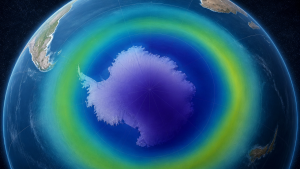
The 2026 Antarctic ozone hole was the seventh largest in 48 years of monitoring by NASA and the National Oceanic and Atmospheric Administration (NOAA), the agencies said on November 4, 2026. They attributed its size to extreme weather, particularly an unusually powerful polar vortex.
Extent and ozone measurements
The ozone hole reached its greatest one-day extent on September 18, at 10.5 million square miles (27.1 million square kilometres). Its average extent during the peak depletion season, from September 7 to October 13, was about 9.6 million square miles (25 million square kilometres). NOAA balloon-borne instruments measured the lowest ozone concentration directly over the South Pole at 105 Dobson units on October 17. The record low is 92 Dobson units, measured in October 2006.
Ozone recovery
Scientists said the 2026 hole would have been 1–2 million square miles larger if ozone-depleting substances were as prevalent as at their atmospheric peak in 2000. NASA ozone research team leader Paul Newman, a senior scientist at the University of Maryland, said on November 4 that the annual hole has been forming later in recent years, indicating ozone-layer recovery. Scientists link long-term recovery largely to the 1987 Montreal Protocol, which phased out ozone-depleting chemicals. By contrast, the 2025 Antarctic ozone hole was the fifth smallest since 1992, NASA and NOAA reported on November 24, 2025.
Important Facts for Exams
- Ozone-hole measurement threshold: The Antarctic ozone hole is conventionally mapped using a total-column ozone threshold below 220 Dobson units, distinguishing severe depletion from higher Antarctic values.
- Dobson unit scale: One Dobson unit represents a 0.01-millimetre layer of pure ozone at standard temperature and pressure if the entire atmospheric column were compressed.
- Vortex-driven ozone chemistry: Within the polar vortex, cold stratospheric conditions foster polar stratospheric clouds; sunlight then activates chlorine compounds that catalytically destroy ozone.
- Montreal Protocol financing: Montreal Protocol implementation is supported by a Multilateral Fund, established in 1991, which helps developing countries meet agreed phase-out obligations.
| Related | |
|---|---|