Supreme Court rejects Bihar restriction on married daughters’ compassionate appointment
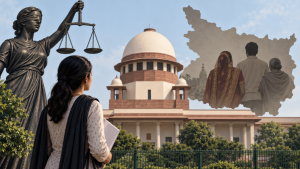
On 23 July 2026, the Supreme Court of India rejected Bihar’s restriction limiting consideration of a daughter for compassionate appointment to cases where she was divorced or deserted. The case was brought by Sayara Khatoon alias Shayara Khatoon and another against the State of Bihar.
Court orders merit-based consideration
A Bench of Justices M. M. Sundresh and Prasanna B. Varale set aside the orders rejecting the daughter’s claim. It directed the authorities to consider the claim on merit within eight weeks of receiving a copy of the order. The Court rejected the presumption that marriage severs a daughter’s ties with her parental family; it did not order automatic appointment.
Important Facts for Exams
- Purpose and legal character: Compassionate appointment is a narrowly construed exception to open recruitment, intended to relieve immediate hardship after an employee’s death, rather than provide hereditary public employment.
- Scheme-specific eligibility: India has no single universal compassionate-appointment code: eligibility is set by the relevant employer’s scheme, so rules can differ between Union departments, states and public bodies.
- Equality in public employment: Article 16(2) of the Constitution bars discrimination in public employment on grounds including sex, while Article 16(1) guarantees equality of opportunity for citizens.
Category: Bihar
Originally written on
July 23, 2026
and last modified on
November 22, 2026.
| Related | |
|---|---|