Makum Fossil Leaves Reveal Assam’s Ancient Screw-Pine Lineage
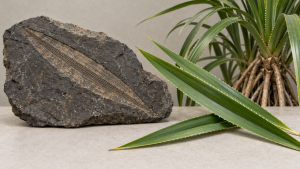
Researchers reported approximately 24-million-year-old fossil leaves from Assam’s Makum coalfield in July 2026. The leaves belong to the screw-pine family, Pandanaceae, which includes plants associated with fragrant kewra.
Locality and research
Harshita Bhatia and Gaurav Srivastava of the Birbal Sahni Institute of Palaeosciences, Lucknow, studied the material from the late Oligocene Tikak Parbat Formation in Tinsukia district. Their findings appeared in Geobios. The Department of Science and Technology highlighted the research in a July release.
Identification of the fossil leaves
The fossils were assigned to Pandanites trinervis. Long, narrow leaves, parallel veins, transverse connecting veins and prickles along the margins supported their identification with Pandanaceae. The evidence concerns an ancient member of the plant family; it does not establish that the exact modern kewra species was present.
What the deposit reveals
The geological and plant evidence indicates a warm, humid, lowland environment containing freshwater swamps, river margins and evergreen forests. The record helps trace the family’s survival and distribution in South Asia during the Paleogene.
Assam’s fossil landscape
The Makum coalfield is part of Upper Assam’s Tinsukia region. Plant fossils preserved in its sediments provide evidence of past vegetation and climate. They record the environment in which the plants lived, rather than the present-day conditions of the coalfield.
| Related | |
|---|---|