Soreng Notified as India’s First Organic Fisheries Cluster
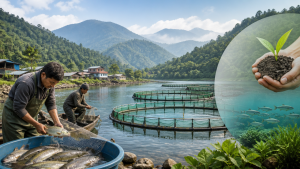
Soreng district in Sikkim was notified as India’s first Organic Fisheries Cluster under the Pradhan Mantri Matsya Sampada Yojana (PMMSY) on 2 November 2026. Union Fisheries Minister Rajiv Ranjan Singh, also known as Lalan Singh, announced the notification during a review visit to the state.
Certification and fisheries infrastructure
Singh launched a Standard Operating Procedure for Organic Certification of Fisheries in the Northeastern region to establish traceability for organic fish destined for domestic and export markets. The cluster promotes farming without chemicals, antibiotics or pesticides, including Amur carp, Indian Major Carps and cold-water trout. He also inaugurated PMMSY infrastructure worth ₹3.75 crore, including hatcheries, feed mills, cold storage, Biofloc units and Recirculatory Aquaculture Systems (RAS).
Market linkages and national clusters
The Sikkim government signed a Memorandum of Understanding with the Indo-Tibetan Border Police for institutional procurement of locally farmed Rainbow Trout. Kisan Credit Cards and financial assistance cheques were distributed to fish growers; Sikkim Fisheries Minister Puran Kumar Gurung and Union Fisheries Secretary Abhilaksh Likhi attended. The government has notified 34 fisheries production and processing clusters nationwide, including organic clusters in Sikkim and Meghalaya. January 2025 reports had also described Soreng as India’s first Organic Fisheries Cluster and cited projects worth ₹50 crore under PMMSY.
Important Facts for Exams
- Infrastructure support: PMMSY provides financial assistance for fisheries infrastructure, including fish-seed farms, feed facilities, markets and processing facilities.
- Credit-linked subsidy: Under PMMSY, fish farmers can apply for a credit-linked subsidy intended to encourage commercial fish farming.
- Biofloc nutrient cycle: In biofloc systems, added carbon helps bacteria absorb nitrogen and produce biomass that serves as food for cultured animals.
| Related | |
|---|---|