Pakistan’s First Astronaut to Fly on China’s Shenzhou-24
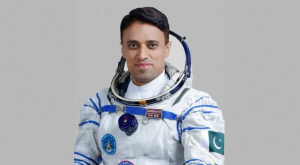
China is scheduled to launch the Shenzhou-24 spacecraft on 25 November 2026 at 8:18 a.m. Beijing time from the Jiuquan Satellite Launch Center in northwest China. The mission will carry Pakistani payload specialist Muhammad Zeeshan Ali, the first foreign astronaut to visit the Tiangong space station and the first Pakistani to travel to space.
Crew and cooperation
The three-person crew comprises commander Tang Hongbo, flight engineer Wu Yi and Ali. His participation forms part of bilateral cooperation under China’s Belt and Road Initiative. On 24 November, the China Manned Space Agency said the crew was in good condition and launch preparations were complete.
Mission objectives
The 41st flight mission of China’s crewed space programme will use a Long March-2F rocket and conduct an in-orbit rotation with the Shenzhou-23 crew. Ali is scheduled to spend about one week aboard the station before returning to Earth with two Shenzhou-23 crew members. Zhu Yangzhu will remain in space for a year-long mission, becoming China’s first astronaut to complete such a stay. Shenzhou-24 also plans 90 scientific experiments and technology tests alongside station research.
Important Facts for Exams
- Orbital-module capability: Shenzhou 2–6 orbital modules had their own propulsion, solar power and control systems; this independent-flight capability was removed from Shenzhou 7 onwards.
- Crew-escape safeguards: Long March 2F has an advanced fault-monitoring and diagnosis system designed to help astronauts escape in an emergency.
- Tiangong module layout: Tiangong has a T-shaped configuration, with the Tianhe core module joined by the Wentian and Mengtian laboratory modules.
- Interconnected station arms: Tiangong’s Tianhe and Wentian robotic arms can be joined to form a roughly 15-metre manipulator for external operations.
| Related | |
|---|---|