North Korea Tests Cluster Warhead for Ballistic Missiles
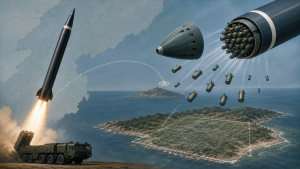
North Korea tested a cluster-bomb warhead for tactical ballistic missiles on 31 October 2026, the state news agency KCNA reported on 1 November. Kim Jong Sik of the ruling Workers’ Party’s Central Military Commission oversaw the test; leader Kim Jong Un was not reported to have attended.
Test details and deployment plan
North Korea’s Missile Administration, including its Ballistic Missile System Institute and Warhead Institute, said the Standard Type 2 warhead could destroy a target area of 12–13 hectares, approximately 30–32 acres. The missile was reportedly fired from near Jeongju in North Pyongan Province at an uninhabited island in the West Sea, also known as the Yellow Sea. Images indicated Hwasong-11D short-range ballistic missiles; analysts suggested this may have been the first launch of a cluster-armed missile from a wheeled mobile launcher.
North Korea plans to let military units select from four categories of cluster warheads, classified for special and standard purposes, by the end of 2026. South Korea’s Joint Chiefs of Staff did not announce the launch on the day it occurred. It later reported tracking related activity and maintaining readiness with the United States. Neither country is a party to the Convention on Cluster Munitions.
Important Facts for Exams
- Submunition dispersal: Cluster munitions may be launched from the ground or dropped from aircraft; the parent weapon releases smaller explosive submunitions over an area.
- Unexploded ordnance: Submunitions that fail to detonate can remain dangerous long after an attack, and locating and removing them is costly.
- Ballistic flight: A ballistic missile receives powered flight only briefly at launch; most of its journey follows an unpowered ballistic trajectory.
| Related | |
|---|---|