Kazakhstan Releases Second Amur Tiger into the Wild
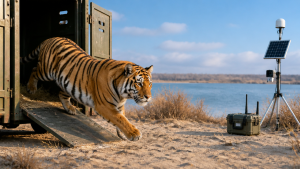
Kazakhstan released a male Amur tiger named Amur into the Ile-Balkhash State Nature Reserve on 31 October 2026. It is the second tiger released there, following Umit, a female, on 31 July. The releases are part of efforts to restore tigers to habitat once occupied by the Caspian, or Turan, tiger, which disappeared from Kazakhstan more than 70 years ago.
Tiger releases and monitoring
Amur, Umit and two cubs arrived from Russia’s Khabarovsk region in May 2026. Amur tigers were selected because of their close genetic relationship to the extinct Caspian tiger. Both adults underwent veterinary and behavioural assessments before release and are tracked with satellite collars. Umit is reportedly adapting and hunting independently. The cubs remain under specialist supervision; authorities expect to assess them for release in 2027.
Habitat restoration and programme targets
Established in 2018, the reserve is part of efforts to restore habitat and prey, including Bukhara deer and kulans. In September 2026, 30 kulans were moved there from Altyn-Emel National Park. The programme aims for a self-sustaining population of about 50 tigers and plans to release at least 10 by 2033. Kazakhstan, Russia, the Amur Tiger Center and the World Wide Fund for Nature are partners. Anti-conflict teams and a resident alert system are intended to reduce risks near villages. Kazakhstan’s Ecology Minister Alibek Kuantyrov and Forestry and Wildlife Committee Chairman Daniyar Turgambayev have addressed the releases.
Important Facts for Exams
- Continental taxonomy: A 2015 taxonomic proposal placed Siberian and Caspian tiger populations within mainland subspecies Panthera tigris tigris, separate from Sunda-island P. t. sondaica.
- Ancestral dispersal: Phylogeographic analysis suggests the shared Caspian–Siberian ancestral population spread from eastern China through the Gansu–Silk Road corridor into Central Asia, then eastwards across Siberia.
- Desert habitat corridors: In Central Asian deserts, Caspian tiger habitat followed watercourses as narrow linear strips, sometimes only a few kilometres wide.
| Related | |
|---|---|