Important Immersive Display Technologies and Formats
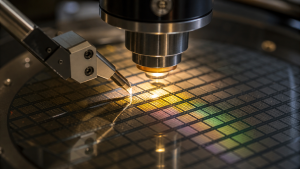
Immersive display systems create virtual environments or overlay digital content on the real world. They are the foundation of VR, AR, MR, and XR, and depend on microdisplays, optics, and software standards for realistic visual experiences.
Primary Microdisplay Technologies
Near-eye displays need compact, high-resolution, energy-efficient screens with strong brightness and image quality.
Micro-OLED (OLED-on-Silicon)
- Design and Structure: Built directly on silicon backplanes instead of glass substrates, enabling very high pixel density.
- Key Specs: Pixel densities can exceed 3,000 pixels per inch (PPI).
- Advantages: High contrast ratios, fast response times, and true black levels.
- Limitations: Lower peak brightness than MicroLEDs reduces performance in bright outdoor AR settings.
- Examples: Premium VR and MR headsets use this technology.
MicroLED
- Design and Structure: Made of microscopic inorganic light-emitting diodes.
- Key Specs: Luminance can exceed 100,000 nits.
- Advantages: Extreme brightness, high energy efficiency, long lifespan, and good performance in direct sunlight.
- Limitations: Manufacturing complexity and transfer-process challenges limit widespread adoption.
- Examples: Lightweight AR smart glasses are targeting this technology for future consumer use.
Liquid Crystal on Silicon (LCoS)
- Design and Structure: A reflective microdisplay technology combining liquid crystals with a silicon backplane.
- Key Specs: Delivers high resolution in a very small physical footprint.
- Advantages: High pixel fill factor reduces the screen door effect.
- Limitations: Requires an external light source, making the optical engine bulkier than self-emitting Micro-OLEDs.
- Examples: Used in enterprise AR headsets.
Digital Light Processing (DLP)
- Design and Structure: Based on a micro-electro-mechanical system (MEMS) chip containing millions of microscopic mirrors.
- Key Specs: Offers high contrast and high optical efficiency.
- Advantages: Rapid switching speed and excellent color uniformity support clear image projection.
- Limitations: Mechanically complex and requires a separate light source.
Optical Combiners and Waveguides
Optical combiners blend computer-generated imagery with the physical world in see-through AR systems.
Waveguide Optic Types
- Diffractive Waveguides: Use microscopic surface relief gratings to redirect light through internal reflection. They are lightweight but can suffer from color dispersion.
- Reflective (Geometric) Waveguides: Use semi-reflective angled mirrors embedded within a glass lens. They provide high image quality but are difficult to manufacture at scale.
- Holographic Waveguides: Use volume holograms embedded in a photopolymer film to guide light. They are highly efficient for specific wavelengths.
Critical Display Standards and Software Formats
Standardized protocols help software work across different XR hardware systems.
OpenXR
- Purpose: An open, royalty-free standard developed by the Khronos Group.
- Function: Simplifies XR software development through a unified API. Developers can write code once and run it across multiple hardware platforms.
- Platforms: Supported by all major hardware manufacturers.
WebXR Device API
- Purpose: A World Wide Web Consortium (W3C) standard.
- Function: Allows web browsers to access VR and AR hardware directly. Users can access immersive experiences through a URL without downloading native apps.
- Compatible Tools: Built on top of WebGL and integrates with frameworks like Three.js, A-Frame, and Babylon.js.
Spatial Audio Formats
- Binaural Audio: Headphone-based audio that models how human ears receive sound from different directions using Head-Related Transfer Functions (HRTF).
- Ambisonics: A full-sphere surround sound format that records audio in three dimensions and allows real-time rotation to match head movement.
Key Performance Metrics of Immersive Displays
| Metric | Unit | Technical Description | Target Value for Immersion |
| Field of View (FOV) | Degrees (°) | The observable angular extent of the display. | Horizontal FOV > 100° |
| Pixels Per Degree (PPD) | Pixels/degree | Resolution relative to the human eye’s visual field. | ~60 PPD (retina resolution limit) |
| Motion-to-Photon Latency | Milliseconds (ms) | The delay between physical head movement and display update. | < 20 ms (to prevent motion sickness) |
| Refresh Rate | Hertz (Hz) | The number of times per second the display updates its image. | 90 Hz to 120 Hz |
| Luminance | Nits (cd/m²) | The intensity of light emitted per unit area. | > 1,000 nits (VR), > 10,000 nits (AR) |
Crucial Rendering and Display Techniques
Foveated Rendering
This technique reduces computational workload by rendering images at lower resolution outside the user’s central gaze.
- Fixed Foveated Rendering (FFR): Renders the edges of the screen at lower resolution and does not track eye movement.
- Dynamic Foveated Rendering (DFR): Uses eye-tracking sensors to continuously adjust the high-resolution rendering zone in real time.
Optical See-Through (OST) vs. Video Passthrough (VPT)
- Optical See-Through: The user views the physical world directly through transparent lenses, with digital elements projected onto the glass. It preserves natural peripheral vision but struggles in bright ambient light.
- Video Passthrough: Opaque displays block the real world while external cameras capture the environment and merge it with digital content in real time. It offers full pixel control but introduces camera latency.
Pupil Replication
- Eye Box: The 3D volume in front of the display where the entire image is visible to the eye.
- Pupil Expansion: Waveguide systems duplicate the light source pupil over a larger area so the user can still see the image even if the headset shifts slightly.
Key Facts and Trivia for Quick Revision
- Screen Door Effect: Visible gaps between pixels that reduce image realism; higher PPD helps eliminate it.
- Flicker Fusion Threshold: The frequency at which intermittent light appears steady to the human eye; immersive displays need high refresh rates to stay above it.
- Vergence-Accommodation Conflict (VAC): A mismatch between where the eyes converge and where they focus, causing visual fatigue in VR.
- Light Field Displays: Capture and project the direction of light rays, not just intensity and color, helping reduce VAC.
- Eye Tracking: Often used not only for foveated rendering but also for user interaction and gaze-based selection.
- Waveguide Coupling: A key challenge in AR optics is efficiently injecting light into the waveguide without losing brightness or color fidelity.
Rare Facts for Prelims
- Retina Display Benchmark: Around 60 PPD is often cited as the point where individual pixels become difficult to distinguish at normal viewing distances.
- MicroLED Advantage: Unlike OLED, MicroLED is an inorganic emissive technology, which generally improves brightness and lifespan.
- HRTF Role: Head-Related Transfer Functions help simulate directional hearing cues such as timing and intensity differences between ears.
- Ambisonics Use: It is especially useful in VR because the sound field can be rotated independently of the listener’s head orientation.
- Waveguide Trade-off: Diffractive waveguides are lighter, but reflective waveguides often deliver better optical clarity.
- OpenXR Benefit: It reduces vendor lock-in by allowing a single application interface across multiple XR devices.
Current General Studies comprises current-affairs-based, General Studies-rich study material on policies, laws, institutions, economy, science, environment, governance, international relations, and other varied but important topics for UPSC and State PSC Prelims examinations.
Fortnightly PDF compilations: Available here
Originally written on
August 19, 2026
and last modified on
August 17, 2026.
| Related | |
|---|---|