IIT Jodhpur researchers are developing an adaptive AI platform to read ancient Indian manuscripts
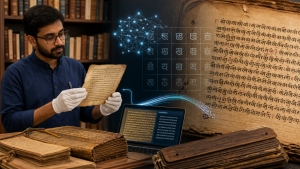
Researchers at IIT Jodhpur are developing an adaptive artificial intelligence (AI) platform to read centuries-old Indian manuscripts. The research, led by Dinesh Mohan Joshi, Assistant Professor at the institute’s School of Liberal Arts, was reported on 3 November 2026.
How the platform will read manuscripts
The platform is being designed to adjust its reading process to each manuscript’s condition. It may improve images where ink is blurred and apply a specialised process to identify broken characters, before interpreting handwriting and converting it into digital text.
Researchers are developing capabilities for six scripts: Devanagari, Sharada, Grantha, Nandinagari, Modi and Tulu-Tigalari. The platform is also intended to support language processing, including word separation, language normalisation, transliteration and translation, to help convey older texts’ meaning in modern languages.
Important Facts for Exams
- Physical formats: Manuscripts may take the form of a bound codex, a scroll, or loose pages, creating varied layouts for digitisation.
- Palm-leaf shape: Palm-leaf manuscripts used in the Indian subcontinent had a distinctive long rectangular shape.
- Devanagari vowel system: Devanagari is an abugida: consonant letters normally include an inherent vowel, while dependent vowel signs alter it and may attach around consonants.
- Grantha’s Sanskrit role: Grantha developed in southern India as a script for Sanskrit, including consonant sounds not represented in the Tamil script’s core inventory.
| Related | |
|---|---|