IISc Releases SraVaani Voice AI Model
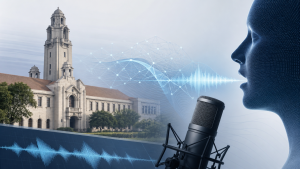
The Indian Institute of Science (IISc) in Bengaluru released SraVaani on 13 August 2026 as an open-source multilingual speech-recognition model. The model was developed by the SPIRE Lab in collaboration with ARTPARK and with support from Google.
What SraVaani Does
SraVaani converts spoken words into text in 65 Indian languages and dialects. The model covers 20 scheduled Indian languages and 45 regional languages, including Garo, Angika, Chakma, Kokborok, Tulu, Bundeli, and Bajjika.
The system supports 10 scripts and includes automatic language identification. This feature removes the need for manual language selection before speech recognition.
Open-Source Access and Licensing
SraVaani was made publicly available on the Hugging Face platform under an MIT licence. The MIT licence permits free use, modification, and redistribution of software with minimal restrictions.
Open-source speech-recognition models are used in machine learning, natural language processing, and assistive technology. Hugging Face is a platform for hosting and sharing artificial intelligence models and datasets.
Project Vaani Data and Performance
SraVaani was trained using data from Project Vaani, which has recorded more than 31,000 hours of natural conversational speech from 156,000 people across 165 districts in 28 Indian states. Project Vaani is a large-scale speech data collection initiative for Indian languages and dialects.
Performance data released with the model showed a 9.5% word error rate for Garo. The next-best tested system recorded a 69.4% word error rate for the same language.
Important Facts for Exams
- IISc stands for the Indian Institute of Science, which is located in Bengaluru, Karnataka.
- Speech recognition is a branch of artificial intelligence that converts spoken language into machine-readable text.
- Scheduled languages are listed in the Eighth Schedule of the Constitution of India.
- The 2011 Census is the latest completed Census of India and is often used for demographic references in current affairs.
Exam-Relevant Context
Resource-constrained languages are languages with limited digital data and fewer technology tools for speech and text processing. Indian language speech models often use multilingual datasets to improve coverage across scripts and dialects.
| Related | |
|---|---|