Gram Sabha Participation Study
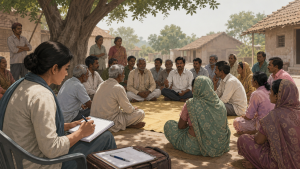
A National Study Report titled Low Participation in Gram Sabha across States and Union Territories is scheduled for release on 30 June 2026 in New Delhi. The study was prepared by the National Institute of Rural Development & Panchayati Raj for the Ministry of Panchayati Raj and covers Gram Sabha participation across States and Union Territories.
Gram Sabha under the Constitution
The Gram Sabha is provided for under Article 243A of the Constitution of India. It is the general body of all registered voters in a village and functions within the Panchayati Raj system at the village level.
Study Design and Coverage
The report is based on field research across about 400 Gram Panchayats in 26 States and Union Territories. The study surveyed approximately 7,790 respondents and included PESA areas and women-led Gram Panchayats.
Participation and Governance Factors
The report examines awareness levels, communication systems, inclusiveness, institutional responsiveness, governance practices, infrastructure availability, and citizen perceptions. These factors are used in studies of local self-government, decentralisation, and participatory democracy in rural India.
Important Facts for Exams
- Article 243A was inserted by the 73rd Constitutional Amendment Act, 1992.
- The Gram Sabha operates at the village level in the Panchayati Raj framework.
- PESA stands for the Panchayats Extension to Scheduled Areas Act, 1996.
- NIRD&PR is a national-level institute under the Ministry of Panchayati Raj.
Exam Relevance
The report uses field data from multiple States and Union Territories and includes both PESA and women-led Gram Panchayats. The Gram Sabha remains a constitutional institution linked to village-level local governance in India.
| Related | |
|---|---|