Community-Based Wildlife Tourism in India
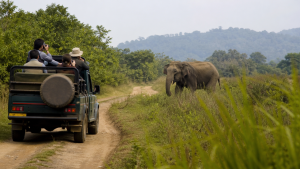
Community-based wildlife tourism links conservation with local livelihoods by involving communities in planning and managing visitor activities. In India, this approach operates within wildlife-protection rules and can support responsible tourism, community participation and sustainable livelihoods, while reducing pressure on habitats and wildlife.
Community-Based Wildlife Tourism
Community-based wildlife tourism (CBWT) places people living near wildlife areas at the centre of tourism planning, delivery and benefit-sharing. Its success depends on genuine participation and on ensuring that tourism income supports conservation and local households.
- Conservation-linked livelihoods: Tourism income depends on healthy ecosystems and wildlife, giving communities an economic stake in conservation.
- Local participation: Residents, including Indigenous groups, can contribute to decisions and manage tourism services.
- Income opportunities: Guiding, homestays, handicrafts and visitor services can diversify livelihoods and reduce reliance on natural resources.
- Cultural preservation: Tourism can support traditional knowledge and cultural practices when communities determine how these are shared.
- Responsible practices: Low-impact activities should respect ecological carrying capacity and minimise disturbance to wildlife and habitats.
Policy and Legal Framework
Wildlife tourism is subject to India’s wildlife-protection framework. Tourism planning must be compatible with the conservation objectives and rules applicable to protected areas.
- Wild Life (Protection) Act, 1972: The Act provides for the protection of wild animals, birds and plants, and for protected areas including National Parks, Wildlife Sanctuaries, Conservation Reserves and Community Reserves. Human activities, including tourism, are regulated to protect wildlife and habitats.
- Protected-area provisions: Sections 18 and 35 provide for the declaration of Wildlife Sanctuaries and National Parks, respectively. Section 36C provides for Community Reserves, enabling conservation on private or community land with local participation.
- National Wildlife Action Plan: The third NWAP (2017–2031), formulated by the Ministry of Environment, Forest and Climate Change (MoEFCC), addresses tourism management and people’s participation. It supports training local nature guides and using tourism revenue to help maintain protected areas.
- Eco-tourism guidelines: The MoEFCC’s Guidelines on Sustainable Eco-Tourism in Forest and Wildlife Areas 2021 promote low-impact tourism in protected areas and designated eco-tourism zones. They call for science-based planning and ecologically, culturally and economically sustainable activities. Temporary structures on forest land are generally to be made predominantly from local materials.
- Tiger-reserve tourism: The National Tiger Conservation Authority (NTCA), a statutory body under the Act, sets normative standards for tourism in tiger reserves. Its guidelines address visitor pressure, carrying capacity and vehicle-distance norms, and promote community-managed homestays to reduce pressure on core areas.
Snow Leopard and Conservation
The snow leopard (Panthera uncia), often called the “ghost of the mountains”, is an indicator species for high-altitude ecosystems. Conservation and tourism initiatives in its range need to account for sensitive habitats and the role of local communities.
- Conservation status: The species is listed as Vulnerable on the IUCN Red List, is protected under Schedule I of India’s Wild Life (Protection) Act, 1972, and is included in Appendix I of CITES and the Convention on Migratory Species (CMS).
- Range in India: It inhabits high mountains of Central and South Asia. In India, it occurs in the trans-Himalayan regions of Ladakh, Himachal Pradesh, Uttarakhand, Sikkim and Arunachal Pradesh, generally at elevations of 3,000–5,400 metres above mean sea level.
- Population assessment: The Snow Leopard Population Assessment of India (SPAI 2024), India’s first scientific nationwide assessment, estimated 718 snow leopards nationally, including 477 in Ladakh.
- Project Snow Leopard: Launched by the MoEFCC in 2009, it uses a participatory, landscape-level approach. It recognises that snow leopards range both inside and outside protected areas and promotes community-based conservation.
Protected Areas in Ladakh
Ladakh’s high-altitude protected areas provide important habitat for snow leopards and other wildlife. They are also among the areas identified for current or planned safari routes.
- Hemis National Park: Located in eastern Ladakh, it is India’s largest national park and is known for its snow leopard population. Its terrain includes arid grasslands, rocky outcrops and alpine forests, at elevations of approximately 3,000 metres to over 6,000 metres.
- Changthang Wildlife Sanctuary: This roughly 4,000-square-kilometre sanctuary on the Changthang plateau supports snow leopards, Kiang (Tibetan wild ass) and the Black-necked Crane. It includes wetlands such as parts of Tso Moriri and the Tso Kar basin.
- Karakoram Wildlife Sanctuary: Covering around 5,000 square kilometres in the eastern Karakoram Range of Leh District, it is habitat for snow leopards, Chiru (Tibetan antelope) and Himalayan Ibex. The Nubra and Shyok Rivers bound the sanctuary.
Safari Planning and Responsible Tourism
Community-led tourism can support conservation only when visitor activity is properly regulated and local people share in its benefits. Guided routes and trained local workers can provide livelihoods while limiting harmful practices such as illegal off-roading.
- Community benefits: Local participation in guiding, driving and visitor services can create sustainable livelihood opportunities, including for local youth.
- Wildlife safeguards: Route management, visitor limits and vehicle rules should minimise disturbance and respect habitat carrying capacity.
- Local capacity: Training local guides and drivers can strengthen community involvement and improve visitor understanding of conservation.
- Implementation: Tourism initiatives need monitoring and fair benefit-sharing so that commercial activity supports conservation rather than placing additional pressure on wildlife areas.
Key Prelims Takeaways
- CBWT involves local communities in tourism management and benefit-sharing.
- The Wild Life (Protection) Act, 1972, is central to wildlife protection and protected-area regulation.
- Section 36C provides for Community Reserves.
- The snow leopard is Panthera uncia, listed as Vulnerable by the IUCN and included in Schedule I of the Act.
- SPAI 2024 estimated 718 snow leopards in India, including 477 in Ladakh.
- Project Snow Leopard was launched in 2009; Wildlife Week is observed annually from 2 to 8 October.
Recent Context
On 7 October 2026, during Wildlife Week, Ladakh launched India’s first high-altitude snow leopard wildlife safari. Lieutenant Governor Vinai Kumar Saxena flagged off six open-back vehicles; initial routes include Rumbak, Shang and Uley, with trained local drivers and guides. The initiative aims to support community livelihoods and curb illegal off-roading.
| Related | |
|---|---|