Centre Extends Nilekani-Led Exam Reform Panel to January 2027
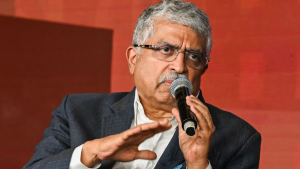
The Centre has extended the tenure of the six-member exam reform task force chaired by Nandan Nilekani until January 2027. Prime Minister Narendra Modi constituted the panel in July 2026, following student protests at Delhi’s Jantar Mantar and elsewhere on 25 July. The protests preceded the resignation of then Union Education Minister Dharmendra Pradhan. The panel had initially been expected to submit its report by October 2026.
Mandate and consultations
The task force is to recommend measures to prevent examination paper leaks and restore public confidence, particularly after controversies over the National Eligibility-cum-Entrance Test (NEET). Its members are former ISRO Chairman S. Somanath, former Intelligence Bureau Director Tapan Deka, IIT Madras Director V. Kamakoti, former Education Secretary Anita Karwal and logistics expert Amrit Lal Meena.
The panel has received more than 50,000 suggestions from students, parents, teachers and academic institutions. It has also consulted the K. Radhakrishnan Committee, formed in June 2024 after the NEET paper leak. That committee submitted 101 recommendations in October 2024. The Centre has announced that NEET will be conducted as a computer-based test (CBT) from 2027, in line with a recommendation of the Radhakrishnan Committee.
Important Facts for Exams
- Conducting agency: The National Testing Agency has been NEET-UG’s nodal conducting agency since 2019; the Central Board of Secondary Education managed it from 2013 to 2018.
- Unified medical admissions: Following the NMC Act 2019, NEET-UG became the sole entrance test for Indian medical colleges, including AIIMS and JIPMER, which had held separate exams.
- NEET syllabus authority: NEET-UG’s syllabus is notified by the National Medical Commission’s Undergraduate Medical Education Board; the NTA administers the examination rather than setting its academic content.
- Anti-cheating law coverage: The Public Examinations (Prevention of Unfair Means) Act, 2024 covers examinations conducted by the NTA, UPSC, SSC, Railway Recruitment Boards and IBPS.
| Related | |
|---|---|