Microsoft Unveils Maia 300 AI Chip
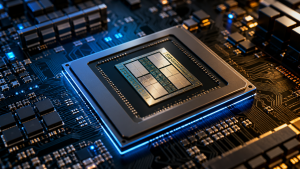
Microsoft unveiled Maia 300, its third-generation custom AI accelerator, on 12 October 2026. Production deployments are planned to begin in 2027, with the company aiming for more than one million chips and multi-gigawatt deployment across its Azure infrastructure.
AI Inference and Intended Workloads
AI inference is the process of using a trained artificial intelligence model to generate outputs from new inputs. Maia 300 is designed for inference workloads including long-context reasoning, latency-sensitive conversations and multi-step agent tasks. Microsoft plans to use the Maia family as an AI inference system for products and services including Microsoft Copilot, GitHub Copilot and OpenAI models hosted on Azure.
Microsoft anticipates that Maia 300 will deliver 40% more tokens per megawatt than leading GPU-based systems; the comparison systems have not been named. Tokens are units of text or other data processed by an AI model. The predecessor, Maia 200, is already powering Microsoft Copilot and supporting Microsoft’s MAI team. GitHub Copilot and Microsoft Foundry are scheduled to use Maia 200 by the end of 2026.
Chiplet Design and Memory
Maia 300 uses a multi-chiplet design, in which specialised computing components are integrated into one processor package. Its compute chiplets are built using TSMC’s N2P process, a 2-nanometre-class manufacturing process. The chip also integrates eight HBM4 stacks, with a total memory capacity of 288 gigabytes and memory bandwidth of 18 terabytes per second.
High-bandwidth memory (HBM) is a type of memory designed to transfer data at high rates. The Maia 300’s memory capacity and bandwidth support the movement of data required by AI computations. Microsoft’s stated design combines compute chiplets and HBM4 within a custom accelerator rather than relying on a single large computing die.
Rack Deployment and Power
Each Maia 300 rack is designed to hold 96 accelerators within a 167-kilowatt power envelope. A deployment of approximately 10,400 such racks would contain about one million accelerators and require roughly 1.7 gigawatts of power. Microsoft plans to scale its Azure Maia deployments to multiple gigawatts from 2027.
Important Facts for Exams
- Maia 300 is Microsoft’s third-generation custom AI accelerator.
- TSMC’s N2P process is used for Maia 300’s compute chiplets.
- Each Maia 300 rack is designed for 96 accelerators and a 167-kilowatt power envelope.
- Maia 300 integrates eight HBM4 stacks, providing 288 gigabytes of memory and 18 terabytes per second of bandwidth.
Maia 300 is intended for AI inference, while Microsoft’s planned large-scale production deployments are set to begin in 2027. Microsoft has stated an expected 40% increase in tokens per megawatt compared with unnamed leading GPU-based systems.
| Related | |
|---|---|