
Lebanon Formally Abolishes Death Penalty
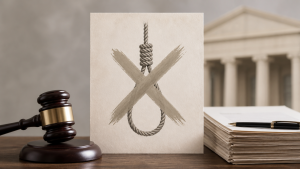
Lebanon’s Parliament voted on 11 August 2026 to formally abolish the death penalty and replace it with life imprisonment with aggravated hard labour for future offences. The law also commutes the sentences of people on death row and codifies a de facto moratorium under which no executions had been carried out in Lebanon since 17 January 2004.
Capital Punishment in Comparative Law
Capital punishment is the legal execution of a person as a criminal penalty. Countries that abolish it may do so in law, in practice, or for ordinary crimes only, while retaining it for exceptional offences under military or wartime law.
Lebanon’s Legal Position
Lebanon became the first country in the Middle East to legally end capital punishment. It is also described in some records as the second member of the 22-state League of Arab States to abolish the death penalty, after Djibouti.
Parliamentary Procedure and Sentence Commutation
The repeal was passed during a legislative session called by Speaker Nabih Berri. The Hezbollah parliamentary caucus voted against the repeal, and the new law retroactively commutes the sentences of about 84 to 85 prisoners who were on death row in Lebanese prisons in late 2025.
Important Facts for Exams
- Lebanon had not carried out an execution since 17 January 2004.
- Life imprisonment with aggravated hard labour is the replacement punishment under the new law.
- Djibouti is the only other League of Arab States member commonly cited as having abolished the death penalty in law.
- The European Union issued a statement welcoming Lebanon’s legislative decision.
Key Institutional and Political Names
Adel Nassar is the Justice Minister of Lebanon. Simon Abi Ramia is a Lebanese Member of Parliament who publicly supported the repeal.
| Related | |
|---|---|



Dr.Cajetan Coelho
August 12, 2026 at 1:26 pmFrom womb to tomb and from cradle to coffin life is sacred and a precious gift.