International Workshop on Tiger Landscapes Inaugurated
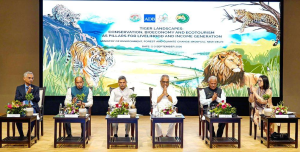
Union Minister for Environment, Forest and Climate Change Bhupender Yadav inaugurated a two-day international workshop in New Delhi on 2 September 2026. The workshop was held on the theme “Tiger Landscapes: Conservation, Bioeconomy and Ecotourism as Pillars for Livelihood and Income Generation” and continued till 3 September 2026.
Tiger Landscapes and Conservation
Tiger landscapes are forest and habitat mosaics associated with tiger populations and wider biodiversity. In India, tiger conservation is linked with the Wildlife (Protection) Act, 1972, Project Tiger, and the National Tiger Conservation Authority, which is the statutory body for tiger conservation.
Institutions Involved in the Workshop
The workshop was jointly organised by the International Big Cat Alliance, the Asian Development Bank, and the National Tiger Conservation Authority. The International Big Cat Alliance is an inter-governmental initiative focused on the conservation of seven big cat species, including the tiger, lion, leopard, snow leopard, cheetah, jaguar, and puma.
MoU on Landscape Conservation
A Memorandum of Understanding was signed between the International Big Cat Alliance and the Asian Development Bank during the event. The MoU covers landscape conservation, capacity building, and nature-positive financing, which is a financing approach linked with biodiversity and ecosystem outcomes.
Important Facts for Exams
- The tiger is listed in Schedule I of the Wildlife (Protection) Act, 1972 in India.
- Project Tiger was launched in 1973 as a centrally sponsored scheme for tiger conservation.
- The National Tiger Conservation Authority was constituted under the Wildlife (Protection) Act, 1972.
- Ecotourism is a form of tourism based on natural areas and biodiversity, and it is often linked with local livelihoods.
Ecological and Livelihood Context
Bhupender Yadav referred to tiger landscapes as natural capital that provide ecosystem services such as water security, climate regulation, and carbon sequestration. Integrated landscape management is used in environmental planning for issues such as desertification, soil degradation, and declining soil moisture.
| Related | |
|---|---|