India and Kazakhstan Sign Extradition Treaty
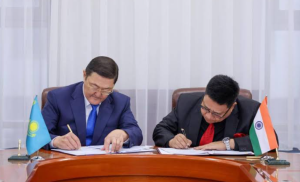
India and Kazakhstan signed an extradition treaty in early November 2026 to strengthen cooperation against international crime and terrorism. Kazakhstan’s Prosecutor General Berik Assylov and India’s Ambassador to Kazakhstan, Y.K. Sailas Thangal, signed the document.
Scope and legal framework
The treaty establishes a framework for extraditing people sought for criminal prosecution or to serve court sentences. It complements existing agreements on mutual legal assistance in criminal matters and the transfer of sentenced persons.
Approval and bilateral context
India’s Union Cabinet, chaired by Prime Minister Narendra Modi, approved the signing and ratification of extradition treaties, including with Kazakhstan, on 26 August 2026. The two countries had previously signed a bilateral extradition treaty on 24 January 2009, ratified on 13 February 2009; the November 2026 development is described as a renewed or re-formalised commitment, with no further details provided. More than 600 Indian companies operate in Kazakhstan, and nearly 10,000 Indian students were enrolled in its educational institutions in the 2025–2026 academic year.
Important Facts for Exams
- Treaty models: Extradition treaties may list specified offences, while dual-criminality treaties require the conduct to be punishable in both countries.
- Specialty rule: Under the specialty rule, a surrendered person is generally prosecutable only for the offence for which extradition was granted, unless the requested state consents.
- Indian surrender procedure: Under India’s Extradition Act 1962, a magistrate’s inquiry may precede the Central Government’s decision whether to surrender a fugitive.
- Interpol Red Notices: An Interpol Red Notice asks countries to locate and provisionally arrest a wanted person, but is not an international arrest warrant; domestic law governs action.
| Related | |
|---|---|