DRDO Successfully Tests Long-Range Kusha Missile
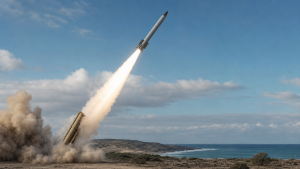
The Defence Research and Development Organisation (DRDO) conducted the maiden flight test of the indigenous long-range surface-to-air missile (LRSAM) Kusha on 23 July 2026. The test took place from APJ Abdul Kalam Island off the coast of Odisha, and the missile intercepted an electronic target simulating a high-speed and high-altitude aerial threat.
Long-Range Surface-to-Air Missiles
A long-range surface-to-air missile is a ground-launched air defence weapon designed to engage aerial targets at extended distances and altitudes. Such systems are used against fighter aircraft, unmanned aerial vehicles, cruise missiles, and other airborne threats.
Project Kusha
Project Kusha is an Indian air and missile defence programme that aims to create a multi-layered national shield by 2035. The Kusha missile system is one of its key components and is intended to cover a broad range and altitude envelope.
System Components and Development
All major weapon system elements of Kusha, including missiles, radars, and the command and control centre, have been developed by DRDO laboratories and industry partners. The system is designed to neutralise fighter aircraft, missiles, unmanned aerial vehicles, and large enemy aircraft.
Important Facts for Exams
- APJ Abdul Kalam Island is a missile testing facility off the coast of Odisha.
- DRDO is India’s premier defence research agency under the Ministry of Defence.
- Surface-to-air missiles are classified by range, such as short-range, medium-range, and long-range systems.
- India’s indigenous air defence programmes include radar, missile, and command-and-control components.
Defence Capability Context
India’s indigenous development of air defence systems reduces dependence on imports for strategic weapons. The Kusha programme adds to the country’s layered air defence architecture and includes missiles, radars, and command systems developed within India.
| Related | |
|---|---|