DGCA Requires Two Pilots for Char Dham Helicopter Flights
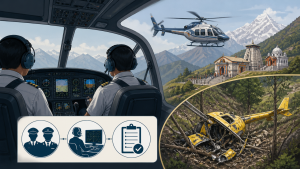
The Directorate General of Civil Aviation (DGCA) directed operators of Char Dham helicopter charter flights to use two pilots from 2 November 2026. The directives were issued on 31 October, following a helicopter crash in Uttarakhand’s Chamoli district on 30 October that killed all six people on board.
New flight requirements
Every flight must have a co-pilot qualified for hill operations. Crews must obtain positive destination and en-route clearances from the control room at Sahastradhara before each flight sector, then submit a Pilot Report (PIREP) after landing at every destination helipad. The head of operations of the Uttarakhand Civil Aviation Development Authority must set procedures for clearances and for receiving, reviewing and maintaining PIREP records.
Operators’ response
In a letter dated 31 October, operators proposed suspending charter services from 2 November until the requirement was reviewed and a mutually workable solution reached. They said two-pilot operations would increase crew, accommodation and logistical costs, which they could not absorb or feasibly pass on to customers. They also objected that the rule was introduced without adequate consultation or assessment of its commercial and operational effects.
Important Facts for Exams
- DGCA direction-making power: Under Rule 133A of the Aircraft Rules, 1937, the DGCA can issue directions consistent with the Act and rules to secure aircraft safety and efficient air transport.
- Accident-investigation responsibility: India’s Aircraft Accident Investigation Bureau, rather than the DGCA, investigates civil aircraft accidents and serious incidents.
- Purpose of a PIREP: In aviation usage, a PIREP reports a pilot’s observed in-flight weather or conditions, helping alert later aircraft to turbulence, icing and other hazards.
- High-elevation helicopter performance: At high-elevation helipads, thinner air reduces rotor performance and engine power, so payload and hover capability depend on temperature, pressure altitude and aircraft limits.
| Related | |
|---|---|